


A Layered Approach to Active Protection
A Layered Approach to Active Protection

U.S. Army soldier Pvt. Joel Torres, assigned to 16th Engineer Battalion, 1st Armored Division, pulls security during an engineering qualification table at Rodriguez Live Fire Range, South Korea, August 8, 2024. The unit is participating in a deployment readiness exercise in support of Operation Pacific Fortitude..
(U.S. Army photo by Spc. Kelsey Kollar, Eighth Army Public Affairs)
(U.S. Army photo by Spc. Kelsey Kollar, Eighth Army Public Affairs)
Shifting Army protection operations from passive to active requires protection thinking that seizes the initiative inside the enemy’s decision cycle and related kill chain. Integrating deception with other protection capabilities can help drive this shift. Treating deception as a primary protection layer, embedded in the main operational plan, can create uncertainty for enemy commanders, consume enemy collection capacity, and divert fires from decisive assets.[i] Recent conflicts show that the proliferation of low-cost sensors and rapid cross-cueing can create more targets for deception and more chances for the enemy to commit to the wrong objective.[ii]
Enemy commanders must make and rely on hypotheses about friendly intent, priorities, and timing. Deception works because targeting rarely follows a linear sequence from detection to engagement. Deception attacks those hypotheses. It changes what the enemy believes, where the enemy looks, and when the enemy commits. Joint doctrine defines military deception as deliberate action misleading adversary decision makers and causing specific actions or inactions supporting the friendly mission.[iii] This definition matters for commanders and staffs because it frames deception as shaping enemy decisions and actions.
Some staffs treat protection as reactive work that starts after the enemy detects the force. That framing misses an advantage: Deception can reduce detection probability and degrade targeting decisions before fires begin.[iv] Recent protection writing has emphasized integrating protection across echelons and layering limited resources.[v] Yet, deception still often appears as a secondary idea instead of a primary layer with governance, integration, and assessment. Deception belongs in the main body of maneuver planning, with detailed control measures and resourcing captured in supporting products, including the protection annex.[vi]
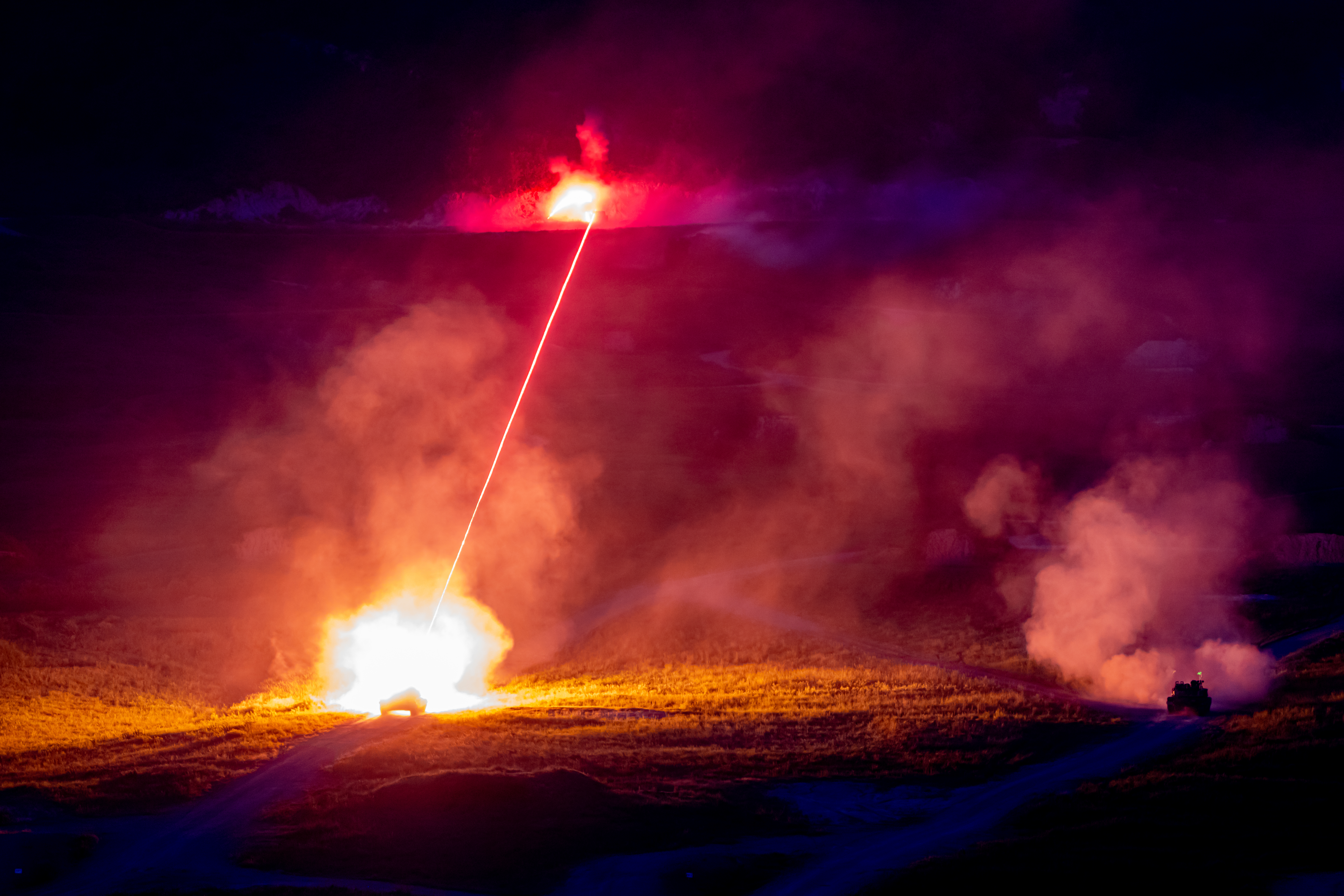
An M1A2 SEP v2 Abrams tank assigned to Alpha Company, 4th Battalion, 70th Armored Regiment, 1st Armored Brigade Combat Team, 1st Armored Division, fires at a target during a night iteration during CALFEX at Rodriguez Live-Fire Complex, South Korea, August 12, 2024.
(U.S. Army photo by Cpl. David Poleski)
(U.S. Army photo by Cpl. David Poleski)
To address gaps in recent protection writing that treats deception as an enabling task without clear governance, resourcing, or assessment, the Army should treat deception as a primary protection layer woven into the main operational plan. It requires deliberate staff planning and committed combat power for achieving the intended effects.
Layered Protection
Protection cells and operations staffs can treat deception as a layered system, linking each layer to a specific disruption point in the enemy's decision process. One model that can be helpful when considering a layered approach consists of narrative and pattern shaping, physical decoys and signature spoofing, information control and emissions discipline, and maneuver deception through feint and demonstration.
Layer 1: Narrative and pattern shaping. Friendly formations capable of establishing disciplined routines can also establish disciplined false routines. Repeated movement patterns, predictable command post jumps, and consistent emission profiles create exploitable signatures.[vii] Deception replaces predictability with deliberate ambiguity, reducing enemy confidence and slowing decisions. After reducing enemy confidence through ambiguity, formations can reinforce a false pattern that appears meaningful to enemy analysts. Formations then present a coherent false pattern that drives a wrong narrative, not simply an ambiguous one.
Layer 2: Physical decoys and signature spoofing. Following the construction of a deceptive narrative, formations can employ decoys. Decoys rarely determine the outcome of a campaign on their own, but they still matter because they can shift enemy attention and fire away from real assets. Consider the case of World War II's Operation Fortitude, a strategic deception operation designed to support Operation Overlord, the allied invasion of France. Operation Fortitude required committing combat power and staff effort to deliberately mislead German decision makers about allied strength, posture, and timing.[viii] Operation Fortitude illustrates the enduring requirement for resourcing, integration, and disciplined execution, even though the sensor environment has changed since 1944 and modern adversaries can cross-cue fires through multiple collection methods.

The unit is participating in a deployment exercise in support of Pacific Fortitude, which supports long-standing agreements to the Republic of Korea by deploying forces, drawing and transporting equipment to validate unit readiness and the U.S. commitment to the alliance.
(U.S. Army photo by Pvt. Madison Blosch)
(U.S. Army photo by Pvt. Madison Blosch)
Formation-based, layered-protection writing reinforces integrating layered defenses and technologies across the formation, with deception and signature work functioning as key enablers, not optional add-ons. The design requirement involves matching enemy sensors to decoys and false signatures.[ix] Thermal decoys matter against infrared sensors. Reflectors and engineered geometry matter against radar detection. Dummy antenna farms and controlled emitters matter against signals intelligence. For decoys and signature spoofing to shape targeting as intended, friendly formations need strong information control and disciplined emissions practices.
Layer 3: Information control and emissions discipline. Deception often fails when friendly emissions reveal intent. Units pairing deception events with emission windows gain coherence across warfighting functions. Joint doctrine highlights centralized planning, control, security, and careful timing as core deception principles, each depending on emission discipline and access control under a single concept.[x] Without this discipline, the first two layers often degrade or collapse. To strengthen these three layers, maneuver deception can add a decisive reinforcing effect when risk and resources allow.
Layer 4: Maneuver deception through feint and demonstration. This is where Army tactical tasks also function as protection tools, not just maneuver options. The Army tactical tasks of feint and demonstration can complete the layered effect when they reinforce the deception intent. Doctrine treats feint and demonstration as attack variants, and their distinguishing value comes from the deception purpose.[xi] These tasks must tie directly to deception intent so that operational staffs can plan them as deception mechanisms rather than stand-alone maneuver events.[xii]

Using deception as a primary protection layer
A feint seeks contact while avoiding decisive engagement, aiming for premature enemy commitment and shifting fires and air defense toward a nondecisive axis.[xiii] In protection terms, a feint can increase survivability for the true main effort if the enemy reallocates intelligence, fires, or air defense in the expected way. A demonstration displays force without seeking decisive contact, aiming for attention fixation and collection shifts while preserving friendly combat power.[xiv] A formation then gains protection effects through reduced collection focus over decisive assets and enemy munitions spent on false problems.
Preventing Collapse
Preventing maneuver deception from collapsing into noise requires synchronizing feints and demonstrations with the signature story. Sustainment patterns, command-post posture, and fires priorities often reveal the decisive operation. A viable deception plan nests feints and demonstrations inside the signature story, combining false logistics movement, controlled emissions, and decoy arrays.[xv] The enemy rarely observes a single action in isolation. Instead, the enemy observes a system of signals, patterns, and cues. A deception plan succeeds when that system tells one consistent story that leads the enemy to commit in the wrong direction.
Execution at Division
Commanders and their staffs can integrate deception operations into the fabric of the maneuver plan through three products:
- Deception objective statement. Writing the objective as the enemy belief you want to create paired with the enemy action you expect ensures clarity. Joint doctrine emphasizes deception causing specific actions or inactions, not merely shaping perceptions.[xvi]
- Deception on the operational synchronization matrix. Placing deception on a separate line in the synchronization matrix enables operational staffs to align feints, demonstrations, decoys, and emission windows with decision points in the scheme of maneuver. Protection doctrine commentary supports organizing protection tasks into clearer categories and employment constructs, integrating them into planning products rather than relegating protection to a checklist or an unread annex.
- Assessment plan. Tracking shifts in enemy collection focus, delayed fires, misallocated munitions, or air-defense displacement helps reveal whether deception is achieving its intended effect. Using friendly effort metrics—such as decoys emplaced—to measure activity and enemy behavior metrics to measure effect ensures that planners avoid mistaking activity for impact.[xvii]
This approach demands disciplined risk management and clear acceptance criteria. Deception carries fratricide risk, miscommunication risk, and execution burden. Commanders can mitigate risk through clear control measures, rehearsals, and graphics, increasing resilience where operational friction exists. Units also plan degraded deception options, since deception depends on timing and synchronization that contested spectrum conditions can disrupt.
Integration and Ownership
Feint and demonstrations remain maneuver-executed tasks led by the operations directorate. The intelligence directorate should manage the adversary’s collection model, indicators, and assessment, grounding deception design in the realities of threat-collection.[xviii] The protection cell should drive protection priorities and identify critical vulnerabilities. This division of responsibilities aligns with joint-deception principles by emphasizing centralized planning, timing, and security—each requiring a single integrator with authority to enforce decisions across the staff.
Counter Argument
Some staffs might argue that deception belongs as a supporting effort because it competes for scarce combat power, adds control measures, and risks confusing friendly formations under pressure. That concern is real, especially in contested spectrum conditions and during rapid transitions. The answer is designing deception with the same discipline as fires and maneuver, then controlling it with graphics, rehearsed triggers, and clear abort criteria. When deception drives specific enemy actions and nests within the scheme of maneuver, it stops being noise and starts producing real protection effects.
Conclusion
Deception operations can be a key contributor in shifting protection from passive to active. Incorporating deception into the main operational plan helps ensure it receives the combat power it requires and stays synchronized across the breadth of the operation. Deception can expand freedom of action by creating uncertainty and misdirection when the enemy commits based on the false story. Treating deception—including feints and demonstrations—as a primary protection layer allows the force to shape the fight earlier and helps the commander gain and maintain the initiative.
About the Author
Lieutenant Colonel Michael Carvelli serves on the First Army Division East staff. He holds a bachelor’s degree in civil engineering technology from the Rochester Institute of Technology, New York, and master’s degrees in operations management from the University of Arkansas, Fayetteville; civil engineering from the University of Florida, Gainesville; defense and strategic studies from the U.S. Naval War College, Newport, Rhode Island; and military operations from the U.S. Army Command and General Staff College, Fort Leavenworth, Kansas.
Endnotes:
- Joint Publication 3-13.4, Military Deception, January 2012, p. I-3. ↩
- Federico Borsari and Gordon B. Davis Jr., “An Urgent Matter of Drones,” Center for European Policy Analysis, 27 September 2023, p. 20. ↩
- Ibid, p. I-1. ↩
- Ibid, p. I-3. ↩
- Bryan B. Ault and Douglas D. Bazil, "Fight to Protect the Force," Line of Departure, 1 September 2025, accessed 4 March 2026, https://www.lineofdeparture.army.mil/Journals/Protection/Protection-Archive/2025-E-Edition/Fight-to-Protect-the-Force. ↩
- Field Manual 6-0, Commander and Staff Organization and Operations, May 2022, p. 2-16. ↩
- JP 3-13.4, p. I-9. ↩
- Michael Donovan, "Strategic Deception: Operation Fortitude," U.S. Army War College, 2002, p. 4. ↩
- Ault and Bazil, "Fight to Protect the Force." ↩
- JP 3-13.4, p. I-5. ↩
- Field Manual 3-90, Tactics, May 2023, p. 5-4. ↩
- Field Manual 1-02.1, Operational Terms, February 2024, pp. 23, 31. ↩
- Ibid, p. 31. ↩
- Ibid, p. 23. ↩
- JP 3-13.4, p. I-5. ↩
- Ibid, p. I-9. ↩
- Army Doctrinal Publication 5-0, Planning, July 2019, p. 5-2. ↩
- Field Manual 3-13, Information, December 2016, pp. 6-7. ↩
Disclaimer 1: The contents of this article do not represent the official views of, nor are they endorsed by, the U.S. Army, the Department of War (DoW), or the U.S. Government.
Disclaimer 2: This article was edited with the assistance of AI tools, and subsequently reviewed and edited by relevant Department of War (DoW) personnel to ensure accuracy, clarity, and compliance with DoW policies and guidance.