Skip to content

Navigation Menu

About

  • Mission and Vision
  • Leadership
  • History
  • Fort Leonard Wood Historic Tour
  • FLW Command Policies and Memorandums of Instruction
  • Fort Leonard Wood Regulations
  • About the Region Video
  • Explore the FLW Region

My Fort Leonard Wood

Visitors Access
Training Information
Graduation Information
Newcomers Information
eGuidon News
Hunting and Fishing
Fort Leonard Wood MWR
Bruce C. Clarke Library
Sexual Harassment Assault Response Prevention (SHARP)
Military Equal Opportunity
Voter Assistance
Army Community Services
Army Emergency Relief (AER)

Contact

  • Crisis Phone Numbers
  • Phone Directory
  • Office of the Inspector General
  • MWR Calendar
  • Feedback (ICE)
  • Public Affairs Office
  • MSCoE Publications
    • Writer's Guide & Submission Guidelines
    • Protection Professional Bulletin
    • Protection Proponent
    • Army Chemical Review
    • Engineer Professional Bulletin
      • The Urgent Subterranean Problem
      • Strengthening Combined Arms Gap-Crossing Operations
      • Training Challenges in Port Damage Repair for Army Engineer Divers
      • The Impact of Data Deluge on the Task Force Engineer Information Processing Solutions for the Modern Operating Environment
      • Returning the Focus to Being Masters of Terrain: Replacing 12B with 19C in the Turret
      • From Tech to Tactics: Integrating the Multi-Source Positioning (Part 3 of 3)
      • The Technological Fix: Building a Resilient Alternatives to GPS (Part 2 of 3)
      • A System at Risk: America's Strategic Vulnerability in GPS (Part 1 of 3)
      • By Engineers, For Engineers: Reflecting on 20 Years of JEOC
      • Rethinking Survivability
      • 12G AIT Transformation to 12N ASI
      • Battlefield Makerspaces
      • Sustaining Division Engineer Battalions
      • Blast Overpressure: Risk Mitigation for Maximum Performance
      • Maintenance Moving Forward
      • 3D Printing in Multidomain Operations United States Army Engineer Regiment
      • Cold Region Engineer Operations: The Engineer Regiment Needs to Get Comfortable Being Cold
      • The Engineer Coordinator History and Usage
      • Security Engineer For 120A Warrant Officer Basic Course
      • South China Sea: The Need for Army Engineer Amphibious Training and Doctrine
      • Enhancing Joint Logistics Over-the-Shore Operations: Lessons From the Gaza Humanitarian Mission
      • Improving Protection Training: How to Prepare for the Next Conflict
      • Urban Combat and The Gaza Metro: Preparing for War in Modern Megacities
      • The Future of Engineers in the South China Sea
      • Brazilian Army Engineer Instruction Center
      • Regimental Command Sergeant Major
      • Regimental Command Warrant Officer
      • Commandant
      • The Use of ARRK to Develop a COP at AO Victory
      • Engineer Reconnaissance: Technical Skills in the Reconnaissance Fight
      • Junior Engineer Officers Need Better Training
      • The Bureaucratic Bind: How Current Administrative Requirements Hinder Warfighting
      • Open Data Sources in Support of Engineer Reconnaissance
      • Training Junior Engineer Officers: The Way Forward
      • What is HMI?
      • Incorporating LMs into TSOs
      • Engineers, Partnerships, and Recruitment
      • Engineers on the Peninsula: Experience and Legacy of the 52nd BEB During KRF-13
      • Condition Checks: Wet-Gap Crossings
      • Operations Turning Point
      • EAB Engineer Battalion Training at JRTC
      • Should Company Commanders Have Dedicated GIS Assets?
      • Engineer Lessons Learned from the War in Ukraine
      • Planning for Construction of the Perfect Castle
      • Lieutenant Development
      • Reflections from a Deputy District Commander
      • Port Damage Repair Using Army Organic Equipment to Test Developing Mission Sets
      • The Future Role of Engineer Reconnaissance in Large-Scale Combat Operations
      • Data-Driven Risk Management in USACE Construction Contracts
      • Using Open-Source Intelligence to Improve Readiness
      • Hamid Karzai International Airport Prime Power Mission
      • Bridging the Gap Together: Send in the Joint Engineer Support Brigade
      • Implementing Lessons Learned to Build a Better Command Post
      • Where Did the IEDs Go? Thoughts on Strategic and Operational Rear Areas
      • Multidomain Operations: The latest Evolution of Operational Doctrine
      • Strong Point Huff: Building The LSCO Fight
      • Managing Manhattan: A Case Study in Complex Project Management
      • Value of the POP Method in Training
      • Lessons Learned From Defender Europe 2022: The MRBC Perspective
      • Let us try to implement FM 3-0: Challenges of LSCO at the Engineer Company Level
      • Activating an MRBC: Challenges and Opportunities in Mobilizing a Force Multiplication Unit
      • Miniature Excavator
      • Engineer Doctrine Corner
      • Engineer Archives
    • Military Police Professional Bulletin
  • U.S. Army Counterintelligence Command

Units / Tenants

  • U.S. Army Engineer School
  • U.S. Army CBRN School
  • U.S. Army Military Police School
  • 102nd Training Division
  • MSCoE Noncommissioned Officers Academy
  • 43rd AG Reception Battalion
  • 58th Transportation Battalion
  • 763D EOD
  • Homeland Defense Civil Support Office
  • Geospatial Enterprise Office
  • General Leonard Wood Community Hospital
  • U.S. Air Force
  • Marine Corps Detachment
  • Navy Detachment
  • U.S. Army Prime Power School

Search

Home U.S. Army home page
Army.mil
U.S. Army Fort Leonard Wood

Home of the Maneuver Support Center of Excellence.


NEW!   Check out the new NCO's Barracks Guidebook!
  1. Home
  2. Contact
  3. MSCoE Publications
  4. Engineer Professional Bulletin
  5. The Urgent Subterranean Problem

The Urgent Subterranean Problem

Listen to This Article
Select 'Read Article Aloud' to begin.

The Urgent Subterranean Problem

By Captain Cameron Ugan

Tunnels and trench warfare have endured on the battlefield for centuries, providing critical protection from enemy fire and concealed routes for moving troops and supplies between fighting positions. Subterranean networks are far less common because their construction demands extensive labor. However, the rise of conflicts involving subterranean environments—and the potential for large scale combat operations—has made subterranean threats more urgent and more dangerous, with no readily available solutions. The tunnel systems in Gaza have offered a necessary wake up call, exposing strategic shortfalls in how the United States approaches this operational domain.

The looming threat of large scale combat operations has dramatically increased the likelihood of fighting in major metropolitan areas. Globally, 192 countries possess some form of subterranean infrastructure—sewers, subway systems, caves, or archaic tunnel networks. The last major conflict in which extensive tunnel systems were used for combat and combat support was the Vietnam War, where Viet Cong tunnel complexes played a central role. However, historical tactics from Vietnam offer limited insight for today’s metropolitan urban environments. United States strategy at the time relied heavily on destroying vast sections of jungle terrain, a method incompatible with modern urban operations.

Contemporary large scale combat operations threats demand urgent action. The central challenge of subterranean warfare today is the difficulty of achieving decisive effects without destroying the tunnel system entirely. The mass destruction approach used in Vietnam is a last resort in urban areas, where minimizing collateral damage and maintaining the support of the local population are essential in an already highly dynamic operating environment.

Beyond the general lack of experience operating in large subterranean environments, numerous tactical complications arise the moment forces enter a tunnel system. Subterranean terrain severely degrades communication systems that rely on line of sight or satellite connectivity. Ballistic engagements in enclosed spaces carry an elevated risk of traumatic brain injuries due to amplified overpressure. Close, dark quarters filled with unfamiliar threats impose extreme cognitive and physical strain on Soldiers, increasing the likelihood of stress related disorders. The physical dimensions of tunnels further constrain operations by limiting the size and amount of equipment that can be brought underground.

None of these challenges matter, however, if the tunnel system cannot be located—a recurring issue in the Gaza area. Missing a tunnel entrance negates building clearing efforts and leaves ground forces dangerously exposed. Together, these factors illustrate the significant tactical problems posed by subterranean networks.

Despite the many tactical challenges posed by subterranean environments, the strategic problem lies in the broader operational implications. Tunnel networks play a central role in the doctrine and strategy of Hamas, a United States-designated terrorist organization that routinely endangers civilians and violates human rights. Its willingness to place noncombatants at risk and disregard the integrity of Gaza has enabled a strategy built around exploiting dense urban terrain and extensive tunnel infrastructure. By employing tactics such as using civilians as “human shields,” Hamas creates a layer of civilian infrastructure between itself and its adversary—one that opposing forces are reluctant to breach due to the risk of mass civilian casualties and the potential loss of international support. This dynamic complicates efforts to achieve decisive effects in subterranean environments and underscores the operational challenges tunnel systems create.

The lessons emerging from Gaza have created important opportunities to refine methods for countering subterranean environments. External tunnel identification begins with strong intelligence collection and detailed analysis of ground level indicators. Cataloging these indicators is essential. For example, certain types of bedrock are far easier to excavate than others. Gaza sits on sandstone, which enables rapid expansion of tunnel networks. In contrast, areas built on granite bedrock generally limit the scale of newly constructed conflict related tunnels, suggesting that any existing systems are older and less extensive. Geospatial tools and intelligence assets can integrate subterranean considerations into broader operational planning, improving the ability to detect, characterize, and anticipate subterranean threats.

Another critical method of anticipating subterranean threats is detailed analysis of satellite imagery to identify subtle changes, anomalies, or patterns associated with tunnel entrances. Artificial intelligence can augment this process when sufficient data exists to train models capable of detecting these indicators at scale. Emerging technologies—such as thermal imaging and ground penetrating radar mounted on drones—can generate detailed renderings that help identify tunnel locations within dense urban terrain.

When employed strategically, advanced imaging tools eliminate the element of surprise and enable friendly forces to rapidly isolate buildings suspected of containing tunnel access points. This allows units to secure the surrounding area before addressing the subterranean component of the operational environment, significantly improving both tempo and force protection.

Because imaging technology has inherent limitations, some tunnels can only be identified by on ground reconnaissance teams, depending on where their entrances are concealed. If friendly forces are to maintain a consistent chance of achieving decisive outcomes in subterranean environments without resorting to widespread destruction, they must study and internalize the methods used by Hamas and incorporate the relevant lessons into training and operational design. Scouts and reconnaissance elements must be trained to recognize indicators of tunnel entrances and to assess subterranean systems on the ground within a given operational environment.

Some measures to address the need for dedicated subterranean training have already been implemented, including the establishment of the subterranean training center at Fort Leonard Wood, Missouri, and the subterranean complex at Fort Bragg, North Carolina. However, this training cannot remain an annual exercise or an occasional temporary duty opportunity for a handful of Soldiers. Maneuver elements operating in urban environments with a high probability of encountering subterranean domains require a dedicated force to manage these challenges.

The most effective solution would be a specialized engineer platoon or company tasked with subterranean operations and equipped with the tools necessary for success. This capability should be designated at the division level at a minimum—and more appropriately at the corps level. The assigned unit would send personnel to subterranean courses and serve as the primary formation for trench and subterranean operations during training. Its mission must be to efficiently neutralize and clear subterranean environments, providing commanders a reliable, expert capability for this increasingly critical domain.

Because subterranean operations fall squarely within the engineer warfighting function, responsibility for this mission should be assigned to sapper or route clearance elements. These formations must be integrated during mission analysis within the military decision making process and carried through planning, preparation, and execution. Units with specialized expertise understand which intelligence products best support their mission; a dedicated subterranean element is therefore optimally positioned to leverage the intelligence gathering methods described above and request tailored geospatial and technical intelligence.

The subterranean component of the operational environment must be treated as a distinct sub mission requiring its own dedicated unit, planning considerations, and training pipeline. Only a purpose built formation can effectively neutralize and clear subterranean threats in support of maneuver operations.

Subterranean operations present a difficult challenge, but not an impossible one; they simply require dedicated time, training, and specialized units. The greatest potential pitfall is failing to anticipate subterranean threats and focusing exclusively on surface level maneuver. Such oversight eliminates any preparedness a maneuver element might have for a subterranean attack and forces it to divert combat power from its main effort to clear tunnels discovered during operations.

By assigning and attaching an engineer element specifically trained for subterranean operations, maneuver forces remain free to secure the broader operational environment without risking inexperienced personnel in complex underground systems. A dedicated subterranean engineer unit can apply specialized training, leverage tailored intelligence, and execute its mission with precision. The United States and its allies are well positioned to apply lessons learned from subterranean combat in Gaza to address current shortcomings and prepare for imminent large scale combat operations engagements in this unique operational domain.

Captain Ugan is currently a student in Engineer Captains Career Course. She holds a Bachelor of Science in biology from the University of Notre Dame, South Bend, Indiana.

The Urgent Subterranean Problem

By Captain Cameron Ugan

Subterranean network blueprint
Figure 1. An illustrative architectural rendering of a complex subterranean route structure, showing the extensive engineering layout required for deep network integration. (AI Generated Graphic)

Tunnels and trench warfare have endured on the battlefield for centuries, providing critical protection from enemy fire and concealed routes for moving troops and supplies between fighting positions. Subterranean (Sub‑T) networks are far less common because their construction demands extensive labor. However, the rise of conflicts involving Sub‑T environments—and the potential for large‑scale combat operations (LSCO)—has made subterranean threats more urgent and more dangerous, with no readily available solutions. The tunnel systems in Gaza have offered a necessary wake‑up call, exposing strategic shortfalls in how the United States approaches this operational domain.

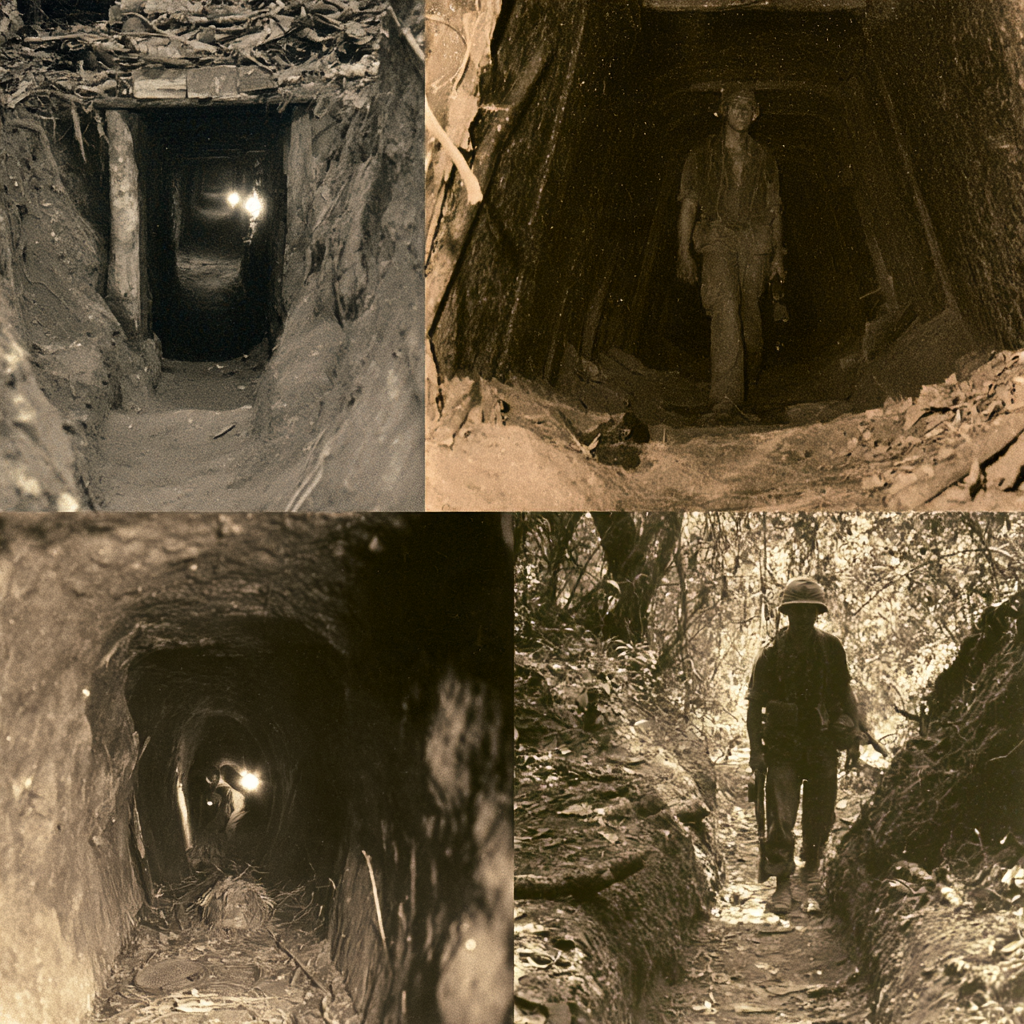
The looming threat of LSCO has dramatically increased the likelihood of fighting in major metropolitan areas. Globally, 192 countries possess some form of Sub‑T infrastructure—sewers, subway systems, caves, or archaic tunnel networks.[1] The last major conflict in which extensive tunnel systems were used for combat and combat support was the Vietnam War, where Viet Cong tunnel complexes played a central role.[2] However, historical tactics from Vietnam offer limited insight for today’s metropolitan‑urban environments. U.S. strategy at the time relied heavily on destroying vast sections of jungle terrain, a method incompatible with modern urban operations.

Soldiers entering a dark sewer system
Figure 2. Conceptual representation of a joint tactical unit preparing to breech a multi-level metropolitan subway and sewer corridor. (AI Generated Graphic)

Contemporary LSCO threats demand urgent action. The central challenge of Sub‑T warfare today is the difficulty of achieving decisive effects without destroying the tunnel system entirely.[3] The mass‑destruction approach used in Vietnam is a last resort in urban areas, where minimizing collateral damage and maintaining the support of the local population are essential in an already highly dynamic operating environment.

Beyond the general lack of experience operating in large Sub‑T environments, numerous tactical complications arise the moment forces enter a tunnel system. Sub‑T terrain severely degrades communication systems that rely on line‑of‑sight or satellite connectivity. Ballistic engagements in enclosed spaces carry an elevated risk of traumatic brain injuries (TBIs) due to amplified overpressure. Close, dark quarters filled with unfamiliar threats impose extreme cognitive and physical strain on Soldiers, increasing the likelihood of stress‑related disorders. The physical dimensions of tunnels further constrain operations by limiting the size and amount of equipment that can be brought underground.[4]

None of these challenges matter, however, if the tunnel system cannot be located—a recurring issue in the Gaza area. Missing a tunnel entrance negates building‑clearing efforts and leaves ground forces dangerously exposed.[5] Together, these factors illustrate the significant tactical problems posed by Sub-T networks.
Anomalies and indicator map of tunnel entrances
Figure 3. Graphical rendering displaying surface indicators and soil-geology dependencies utilized by scouts to locate concealed tunnel shafts. (AI Generated Graphic)

Despite the many tactical challenges posed by Sub‑T environments, the strategic problem lies in the broader operational implications. Tunnel networks play a central role in the doctrine and strategy of Hamas, a U.S.-designated terrorist organization that routinely endangers civilians and violates human rights. Its willingness to place noncombatants at risk and disregard the integrity of Gaza has enabled a strategy built around exploiting dense urban terrain and extensive tunnel infrastructure. By employing tactics such as using civilians as “human shields,” Hamas creates a layer of civilian infrastructure between itself and its adversary—one that opposing forces are reluctant to breach due to the risk of mass civilian casualties and the potential loss of international support.[6] This dynamic complicates efforts to achieve decisive effects in Sub‑T environments and underscores the operational challenges tunnel systems create.

The lessons emerging from Gaza have created important opportunities to refine methods for countering Sub‑T environments. External tunnel identification begins with strong intelligence collection and detailed analysis of ground‑level indicators. Cataloging these indicators is essential. For example, certain types of bedrock are far easier to excavate than others. Gaza sits on sandstone, which enables rapid expansion of tunnel networks. In contrast, areas built on granite bedrock generally limit the scale of newly constructed conflict‑related tunnels, suggesting that any existing systems are older and less extensive. Geospatial tools and intelligence assets can integrate Sub‑T considerations into broader operational planning, improving the ability to detect, characterize, and anticipate subterranean threats.[7]

Thermal scan mapping underground voids
Figure 4. An illustration of a modern drone-mounted thermal mapping suite detecting heat signatures and structural anomalies in dense urban zones. (AI Generated Graphic)

Another critical method of anticipating Sub‑T threats is detailed analysis of satellite imagery to identify subtle changes, anomalies, or patterns associated with tunnel entrances. Artificial intelligence (AI) can augment this process when sufficient data exists to train models capable of detecting these indicators at scale. Emerging technologies—such as thermal imaging and ground‑penetrating radar mounted on drones—can generate detailed renderings that help identify tunnel locations within dense urban terrain.

When employed strategically, advanced imaging tools eliminate the element of surprise and enable friendly forces to rapidly isolate buildings suspected of containing tunnel access points. This allows units to secure the surrounding area before addressing the Sub‑T component of the operational environment, significantly improving both tempo and force protection.

Because imaging technology has inherent limitations, some tunnels can only be identified by on‑ground reconnaissance teams, depending on where their entrances are concealed. If friendly forces are to maintain a consistent chance of achieving decisive outcomes in Sub‑T environments without resorting to widespread destruction, they must study and internalize the methods used by Hamas and incorporate the relevant lessons into training and operational design. Scouts and reconnaissance elements must be trained to recognize indicators of tunnel entrances and to assess subterranean systems on the ground within a given operational environment.[8]

Sappers training in a subterranean facility
Figure 5. A conceptual training facility mockup depicting a specialized sapper squad conducting rapid underground clearing operations. (AI Generated Graphic)

Some measures to address the need for dedicated Sub‑T training have already been implemented, including the establishment of the Sub‑T training center at Fort Leonard Wood, Missouri, and the Sub‑T complex at Fort Bragg, North Carolina. However, this training cannot remain an annual exercise or an occasional temporary duty (TDY) opportunity for a handful of Soldiers.[9] Maneuver elements operating in urban environments with a high probability of encountering Sub‑T domains require a dedicated force to manage these challenges.

The most effective solution would be a specialized engineer platoon or company tasked with Sub‑T operations and equipped with the tools necessary for success. This capability should be designated at the division level at a minimum—and more appropriately at the corps level. The assigned unit would send personnel to Sub‑T courses and serve as the primary formation for trench and subterranean operations during training. Its mission must be to efficiently neutralize and clear Sub‑T environments, providing commanders a reliable, expert capability for this increasingly critical domain.

Because Sub‑T operations fall squarely within the engineer warfighting function, responsibility for this mission should be assigned to sapper or route‑clearance elements. These formations must be integrated during mission analysis within the military decision‑making process (MDMP) and carried through planning, preparation, and execution. Units with specialized expertise understand which intelligence products best support their mission; a dedicated Sub‑T element is therefore optimally positioned to leverage the intelligence‑gathering methods described above and request tailored geospatial and technical intelligence.

The Sub‑T component of the operational environment must be treated as a distinct sub‑mission requiring its own dedicated unit, planning considerations, and training pipeline. Only a purpose‑built formation can effectively neutralize and clear subterranean threats in support of maneuver operations.

Sub‑T operations present a difficult challenge, but not an impossible one; they simply require dedicated time, training, and specialized units. The greatest potential pitfall is failing to anticipate Sub‑T threats and focusing exclusively on surface‑level maneuver. Such oversight eliminates any preparedness a maneuver element might have for a subterranean attack and forces it to divert combat power from its main effort to clear tunnels discovered during operations.

By assigning and attaching an engineer element specifically trained for Sub‑T operations, maneuver forces remain free to secure the broader operational environment without risking inexperienced personnel in complex underground systems. A dedicated Sub‑T engineer unit can apply specialized training, leverage tailored intelligence, and execute its mission with precision. The United States and its allies are well‑positioned to apply lessons learned from subterranean combat in Gaza to address current shortcomings and prepare for imminent LSCO engagements in this unique operational domain.Engineer Watermark Crest

About the Author

Captain Cameron Ugan is currently a student in the Engineer Captains Career Course. She holds a Bachelor of Science in biology from the University of Notre Dame, South Bend, Indiana.

Endnotes:

  1. “192 Countries—Every Underground Cities & Secrets on Earth,” Theboldearth.com, 2026, https://theboldearth.com/stories/underground-cities-caves-tunnels-every-country. ↩
  2. INSS, “What Have We Not Yet Grasped about the Strategic Implications of Gaza’s Underground Challenge,” August 3, 2025, https://www.inss.org.il/publication/gaza-tunnels/. ↩
  3. INSS, “What Have We Not Yet Grasped.” ↩
  4. John Spencer, “Israel’s New Approach to Tunnels: A Model Shift in Underground Warfare,” Modern War Institute, 2 Dec. 2024, https://mwi.westpoint.edu/israels-new-approach-to-tunnels-a-model-shift-in-underground-warfare/. ↩
  5. INSS, “What Have We Not Yet Grasped.” ↩
  6. John Spencer, “Gaza’s Underground: Hamas’s Entire Politico-Military Strategy Rests on Its Tunnels,” Modern War Institute, January 18, 2024. ↩
  7. “Subterranean Operations: Israeli Defense Force Lessons from Gaza,” U.S. Army, September 10, 2025, https://www.army.mil/article/288356/subterranean_operations_israeli_defense_force_lessons_from_gaza. ↩
  8. “Subterranean Operations.” ↩
  9. John Spencer, “Gaza’s Underground.” ↩

Disclaimer 1: The contents of this article do not represent the official views of, nor are they endorsed by, the U.S. Army, the Department of War, or the U.S. government.

Disclaimer 2: This article was edited with the assistance of AI tools, and subsequently reviewed and edited by relevant Department of War (DOW) personnel to ensure accuracy, clarity, and compliance with DOW policies and guidance.

Download Original PDF Document
Published November 4, 2026
Share this page:

Army.mil

Army.mil


Employment

FOIA

Terms of Use

Accessibility/Section 508

Ready Army


Need Help? Try Army A-Z

My Army Benefits

Warriors Wanted Videos

Page Last Modified: 11/4/26, 5:18 PM

Army CID Submit a Tip / Report a Crime Logo

ManeuverSptCtrOfExce_nobackground.fw.png

Fort Leonard Wood


Policies and Regulations

MSCoE MEO and Garrison EEO

SHARP

Provide Feedback

Webmaster

PRIVACY


Community Resource Guide

https://www.usainscom.army.mil/isalute/iSalute - Report suspicious activity

imcom.army.mil

U.S. ARMY INSTALLATION MANAGEMENT COMMAND


"We Are the Army's Home"

FIND A GARRISON

Survivor Outreach Services | Total Army Sponsorship | Safety

Human Resources | Civilian Expeditionary Workforce

U.S. Army Environmental Command | Assistant Secretary of the Army for Installations, Energy & Environment

Back to Top