




Published February 5, 2026
By Adam Potter, Madeline Poley-Bogan, Karleigh Bradbury, Karl Friedl, and William Tharion
Introduction
Balancing robust Chemical, Biological, Radiological, Nuclear (CBRN) protection with minimal thermal strain is critical for warfighter readiness and operational effectiveness. The inherent impermeability of chemical protective clothing (CPC), while blocking hazardous agents, imposes a significant thermal and physiological burden, as seen in Figure 1. By restricting natural cooling mechanisms, CPC leads to heat stress, performance degradation, and potentially life-threatening hyperthermia (heat stroke). The ultimate goal is to safeguard operators from CBRN threats while mitigating the severe risks of heat illness, injury, and fatality.

Figure 1. Trade-offs in CBRN protection and heat dissipation
The U.S. Army Research Institute of Environmental Medicine (USARIEM) addresses this challenge through a vertically integrated scientific approach. As the premier human performance laboratory for the in the federal government, USARIEM provides guidance on material solutions and develops standard operating procedures (SOPs) for CBRN personnel. The work at USARIEM spans the entire program lifecycle: from foundational research on heat transfer and basic CPC testing to post-acquisition assessments of fielded solutions. All this is to rigorously evaluate effectiveness, usability, and operator acceptance based on controlled studies and real-world utilization.
The Challenge: Chemical Protection vs. Thermal Strain
CPC is designed with impermeable or selectively permeable materials that block hazardous agents. This barrier, however, also impedes the evaporation of sweat—the body's primary means of dissipating heat. The trapped moisture increases humidity within the suit, further hindering evaporative cooling and leading to a rapid rise in skin and core body temperatures. The physiological consequences of this thermal burden are significant:
- Impaired cognitive function: Heat stress can degrade decision making, reaction time, and overall cognitive performance.
- Decreased physical performance: Muscle fatigue, dehydration, and cardiovascular strain limit physical endurance and strength.
- Increased risk of heat illness: Prolonged exposure to high heat and humidity, especially during exercise or while wearing CPC, significantly increases the risk of heat exhaustion, heat stroke, and death.
Optimizing CPC design and operational strategies is therefore a critical need for the military to minimize thermal strain without compromising protective capabilities.
USARIEM's Role: Assessing and Predicting Thermal Burden
USARIEM employs a multifaceted approach to understand and mitigate the physiological burden of CPC, combining controlled laboratory studies, predictive modeling, and real-world field deployments.
Biophysical Clothing Assessments Using Specialized Thermal Manikins
USARIEM uses advanced thermal manikins to build a foundational understanding of how clothing impacts human physiology, as seen in Figure 2. These manikins mimic human thermoregulation, including sweating rates and skin temperature regulation. In controlled climate chambers, researchers precisely measure the thermal and evaporative resistance of different CPC configurations, quantifying the inherent burden a suit will impose.1 This work provides critical data on heat exchange characteristics, including—
- Thermal resistance: The measure of dry heat exchange or insulation provided by clothing.
- Evaporative resistance: The measure of resistance to moisture vapor transfer through clothing, indicating how much sweat can evaporate.
- Water vapor permeability: The ease with which water vapor passes through the material.
- Wind effects on biophysics: The influence of wind on biophysical properties, revealing environmental impacts on protection or burden.
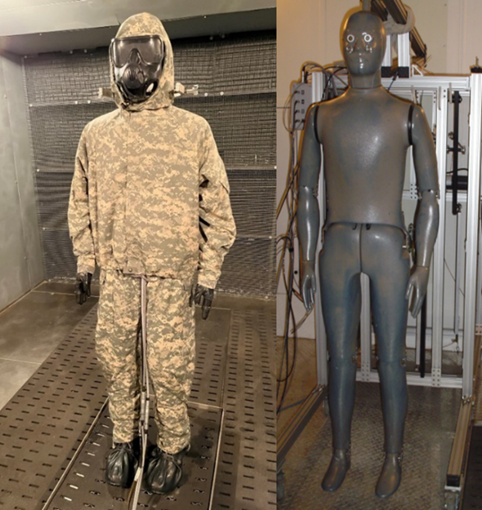
Figure 2. USARIEM's specialized thermal manikins. (Photo credit: Madeline Poley-Bogan)
Controlled Human Laboratory Trials
USARIEM conducts rigorous, direct human studies in state-of-the-art climate chambers.2 Human volunteers perform simulated military tasks or exercise protocols while wearing various CPC configurations under precisely controlled temperature, humidity, and wind conditions, as shown in Figures 3 and 4. A comprehensive suite of physiological parameters (core and skin temperatures, heart rate, metabolic rate, sweat rate, and hydration status) and performance metrics (physical and cognitive) is continuously monitored. These laboratory studies may be conducted if the system or conditions of use are substantially different than previously tested and modeled systems. Otherwise, model predictions can provide immediate assessment as the physiological models should have already been used in the development of a new CPC. The lab studies provide empirical data used for further validating models. These models are used by materiel developers early in the development of new ensembles, and by combat developers for evidence-based guidelines for safe operations.
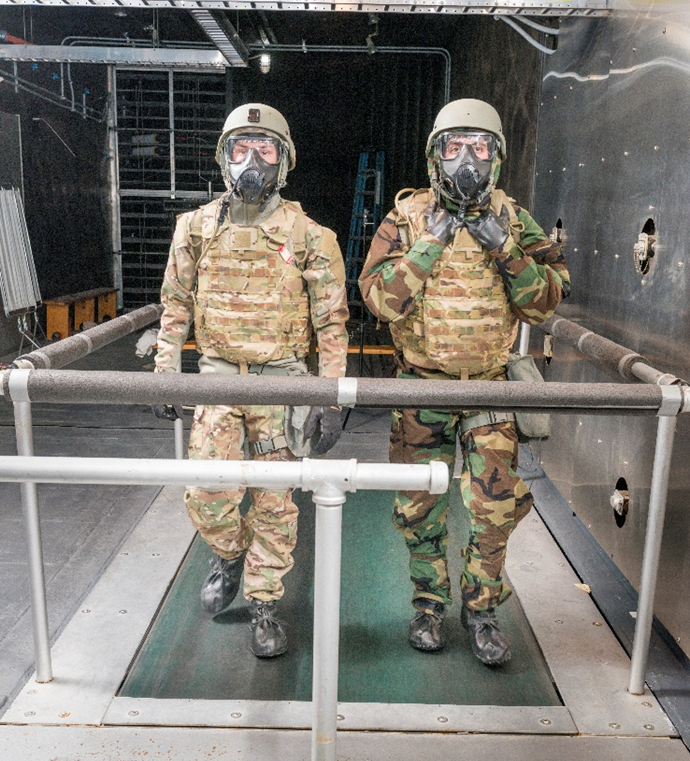
Figure 3. Human subject research in climate chamber. (Photo credit: David Kamm)
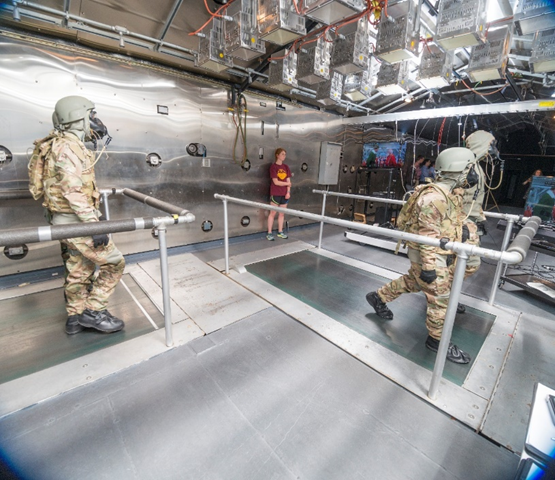
Figure 4. Human subject research in climate chamber (marching simulation). (Photo credit: David Kamm)
Advanced Predictive Modeling
USARIEM has developed mathematical models that predict the physiological responses of warfighters wearing CPC under various environmental conditions and activity levels. This began with the massive 1985 Physiological and Psychological Effects of the Nuclear, Biological, and Chemical Environment and Protective Equipment (P2NBC) program, when USARIEM was asked to develop early predictive thermal models.3 The models have continued to develop, incorporating more conditions, and evolving from average group predictions to detailed personalized forecasts including algorithms linked to wearable physiological monitoring. These models incorporate human-centric and environmental factors, including individual characteristics (age, fitness, acclimatization, metabolic rate), clothing properties (thermal and evaporative resistance, permeability), environmental conditions (temperature, humidity, wind, solar radiation), and terrain.
One key tool is the Heat Strain Decision Aid (HSDA), an empirically based thermoregulatory model that predicts core body temperature by integrating inputs related to the individual, clothing values, environmental conditions, and activity.4 The HSDA relies on the heat balance equation, accounting for heat production, environmental heat gain, and heat dissipation. It has been instrumental in quantifying details for important guidance documents, such as the U.S. Army Technical Bulletin Medical (TB Med) 507,5 and has since been transitioned to multiple DoW organizations and international partners.
Real-Time Physiological Status Monitoring and Field Studies
Bridging the gap between laboratory predictions and dynamic, real-world variability, USARIEM is a longtime leader in the development and deployment of Real-Time Physiological Status Monitoring (RT-PSM) systems. As seen in Figures 5 and 6, these wearable sensors continuously collect individualized physiological data (core and skin temperatures, heart rate, respiration rate, activity levels) from users in operational or simulated field environments. RT-PSM provides real-time assessments of a Soldier's status, allowing for timely intervention to prevent heat illness and providing empirical data to refine protective strategies and future CPC designs. USARIEM has led development and technical oversight for both commercial and government RT-PSM solutions and pursues its own algorithm development for health status predictions.

Figure 5. Real-time physiological status monitoring (RT-PSM) in field training. (Photo credit: Mark Buller)

Figure 6. RT-PSM system and data dashboard. (Photo credit: William Tharion)
Real-World Impact and Continuous Improvement: The Civil Support Team Initiative
The National Guard Bureau Weapons of Mass Destruction–Civil Support Teams (CSTs) are specialized units responsible for responding to CBRN incidents domestically. Given the inherent thermal and respiratory risks associated with full encapsulation, CSTs are prime candidates for early implementation of RT-PSM technologies and leveraging USARIEM's modeling capabilities, including the HSDA. The National Guard Bureau, co-led by USARIEM through an integrated product team (IPT), conducted a nationwide effort to integrate RT-PSM into all 57 CST units.6 This comprehensive initiative encompasses the deployment of multiple technologies—including a wearable physiological device, a communication element, and an end-user display—and necessitates diverse expertise for successful system integration.
This initiative involves—
- Technology evaluation: Rigorous testing of commercially available RT-PSM systems for reliability, accuracy, and user-friendliness in CST applications.
- Training and education: Comprehensive programs for CST personnel on RT-PSM use, sensor placement, data interpretation, and intervention strategies.
- Integration into operational protocols: Development of SOPs for integrating RT-PSM data into CBRN response decision making.
- Data analytics and reporting: Establishment of platforms to track physiological trends, identify risk factors, and improve heat mitigation strategies.
This comprehensive rollout also included rigorous post-acquisition and deployment assessments, critical for continuous improvement.7 Surveys and structured focus groups with experienced CST users (6+ months of use) revealed valuable insights. While 97% of respondents believed a system meeting their expectations would be useful, only 60% found the fielded RT-PSM system acceptable. Primary drawbacks included communications issues, lengthy setup times, and system unreliability. Though not a deciding factor for acceptability, the chest harness design was also reviewed negatively.8 This feedback is crucial for refining RT-PSM technologies and expanding their application to other military and civilian CBRN response units.
Conclusion
Balancing chemical protection and thermal strain remains a critical challenge in CBRN operations. USARIEM's comprehensive research efforts, including controlled human trials, advanced clothing assessments with thermal manikins, sophisticated predictive modeling such as HSDA, and the development and deployment of RT-PSM technologies, are essential for mitigating the physiological burden imposed by CPC. The ongoing rollout of RT-PSM to National Guard Bureau CSTs exemplifies the commitment to innovation to protect our Nation's first responders and enhance their ability to respond to CBRN threats. Continued research and development are crucial for forming the next generation of CPC and optimizing operational strategies to minimize thermal strain and maximize warfighter performance in the face of evolving CBRN challenges. The "razor's edge" between robust protection and optimal performance demands constant vigilance and innovation to ensure that warfighters can operate safely and effectively in the most demanding CBRN environments.
Endnotes:
1.Potter AW, Gonzalez JA, Karis AJ, Blanchard LA, Rioux TP, and Santee WR, Biophysical characteristics of chemical protective ensemble with and without body armor, (Natick, MA: United States Army Research Institute of Environmental Medicine, Technical Report T15-8, 2015).
2.Potter AW, Hunt AP, Cadarette BS, Fogarty A, Srinivasan S, Santee WR, Blanchard LA, and Looney DP, “Heat Strain Decision Aid (HSDA) accurately predicts individual-based core body temperature rise while wearing chemical protective clothing,” Computers in Biology and Medicine, no. 107 (2019): 131-136.
3.Santee WR, Matthew WT, and Tharion WJ, Simulated approach marches during thermal stress: a P2NBC2 study, (Natick, MA: United States Army Research Institute of Environmental Medicine, Technical Report T12-92, 1992).
4.Potter AW, Blanchard LA, Friedl KE, Cadarette BS, and Hoyt RW, “Mathematical prediction of core body temperature from environment, activity, and clothing: The heat strain decision aid (HSDA),” Journal of Thermal Biology, no. 64 (2017): 78-85.
5.US Army, Heat Stress Control and Heat Casualty Management, (Washington, DC: Technical Bulletin, Medical, 507, 2022).
6.Tharion WJ, Maeder S, and Jones R, “Fielding military health status wearables,” Army Acquisition Logistics and Technology (AL&T) Magazine Supplement 2022 Major General Harold J. “Harry” Greene Awards for Acquisition Writing, Spring 2023, 26-30. https://asc.army.mil/web/wp-content/uploads/2023/04/2021_ACQ_writing_awards-PROOF_FINAL.pdf.
7.Tharion WJ, Halford EN, and Potter AW, Post Acquisition Surveillance Monitoring of the Fielding of Physiological Status Monitoring (PSM) Systems to the Weapons of Mass Destruction – Civil Support Teams (WMD-CSTs), (Natick, MA: United States Army Research Institute of Environmental Medicine, Technical Report T25-005, 2025).
8.Ibid.
Adam W. Potter, Ph.D., is a Research Physiologist at the U.S. Army Research Institute of Environmental Medicine (USARIEM). Dr. Potter leads mathematical physiology research, developing predictive models for Army planners, decoding sensor information for real-time decision-making, and uncovering complex data relationships to identify new health and performance readiness metrics.
Madeline M. Poley-Bogan, M.S., is a Research Fellow at USARIEM. She specializes in biophysics, modeling the combined effects of clothing, weather conditions, and human physiology through specialized human manikin technologies originally developed by the Army.
Karleigh E. Bradbury, Ph.D., is a Research Physiologist at USARIEM and a Department of War (DoW) SMART Scholar. Her work spearheads Army research in human performance, environmental physiology, and thermoregulation, specifically addressing the physiological impacts of exercise and stressors while wearing chemical protective clothing during military operations.
Karl E. Friedl, Ph.D., Colonel (MSC, Army, retired), is a Science and Technology leader and a member of the Senior Executive Service (ST/SES). As the Chief Physiologist for the U.S. Army, he conceives and champions physiological research to create new options and solutions for future Soldiers.
William Tharion, MS, MBA, is a Research Psychologist at USARIEM. Mr. Tharion is the technical lead for the transition of real-time sensing capabilities to the National Guard Bureau. His expertise spans cognitive sciences, wearables, and human performance, with a demonstrated ability to provide actionable solutions for Service members.
*This article was edited with the assistance of artificial intelligence (AI) tools. Final review and editing were conducted by authorized DoW personnel to ensure accuracy, clarity, and compliance with DoW policies and guidance.
*The contents of this article do not represent the official views of, nor are they endorsed by, the U.S. Army, the Department of War, or the U.S. government.