


LTC Ryan Hodgson
Battalion Commander
Welcome Letter

CSM Adam L. Bryan
Senior Enlisted Leader
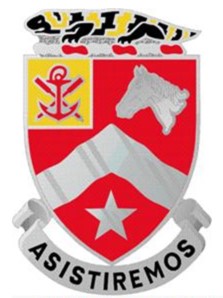
The 9th Engineer Battalion—known as the "Gilas"—has been an integral combat support element of the United States Army for over a hundred years. Operating under the proud mottos "Asistiremos" ("We will assist") and "First to Cross!", the battalion has consistently provided vital mobility, counter-mobility, and survivability support in the military's most challenging hours.
The battalion's most legendary chapter was written during World War II in Europe. After defending Luxembourg during the Battle of the Bulge—for which Company A received the Presidential Unit Citation—the 9th Engineers moved toward the Rhine River. On March 7, 1945, the battalion achieved military immortality during the Battle of Remagen. They played a pivotal role in capturing the Ludendorff Bridge, the last standing permanent bridge across the Rhine. Working under intense German artillery fire and aerial bombardment, these combat engineers repaired the damaged structure, establishing a vital bridgehead that allowed thousands of Allied troops to pour into the German heartland. This heroic feat, which significantly shortened the war, earned the battalion an Oak Leaf Cluster to their Presidential Unit Citation. Following the Nazi surrender, they performed occupation duties in Bavaria before inactivating in October 1945.
Reactivated in 1952, the battalion relocated to West Germany in 1957. Stationed in Kitzingen and later Aschaffenburg, the "Gilas" stood on the front lines of the Cold War, maintaining readiness and building defense infrastructure until their inactivation in 1991. In 1996, the battalion reactivated to support peacekeeping in the Balkans. Deployed to Bosnia, they earned the Army Superior Unit Award for meticulous minefield clearance and route reconnaissance. In June 1999, the 9th Engineers deployed to Kosovo under Task Force Falcon, becoming the very first U.S. battalion to stand up at Camp Bondsteel.
In the 21st century, the 9th Engineer Battalion deployed multiple times to Iraq and Afghanistan. During the Iraq War, they executed countless perilous route clearance, obstacle construction, and security missions. Notably, during the 2008–2010 deployment, Bravo Company executed 253 route clearance missions covering nearly 30,000 kilometers, successfully breaching heavily mined roads using Mine-Clearing Line Charges (MICLICs) and earning the prestigious 2009 Itschner Award. In 2011, designated as Task Force Gila, the battalion deployed to Paktika Province, Afghanistan, providing critical engineering support under Operation Enduring Freedom.
Following a brief inactivation in 2013, the unit was reactivated on May 18, 2015, as the 9th Brigade Engineer Battalion (9th BEB). Today, they are stationed at Fort Stewart, Georgia, as part of the 2nd Armored Brigade Combat Team, 3rd Infantry Division, training continuously to face modern threats.
September 2023, the 3rd Infantry Division with its 2nd Armored Brigade Combat Team—deployed to Poland and the Baltic states. Their mission is to support NATO allies, deter further regional aggression with a primary strategic focus of securing the Suwalki Gap, and build seamless interoperability with host-nation militaries. As a key component, the 9th BEB deployed directly to northeastern Poland to serve alongside NATO’s enhanced Forward Presence (eFP) Battle Group Poland. Stationed near the Bemowo Piskie Training Area, the "Gilas" have not only engaged in rigorous defense drills but have also forged deep relationships with the local population. Their legacy is etched in the freedom of millions, and their motto "First to Cross!" remains a living promise of their enduring readiness to assist the nation whenever and wherever they are called.
9TH ENGINEER BATTALION (2ABCT)
Primary: 571-801-1749

| Sunday | 24/7 |
| Monday | 24/7 |
| Tuesday | 24/7 |
| Wednesday | 24/7 |
| Thursday | 24/7 |
| Friday | 24/7 |
| Saturday | 24/7 |
BLDG 8390
594 Vanguard Rd
Fort Stewart GA 31315