








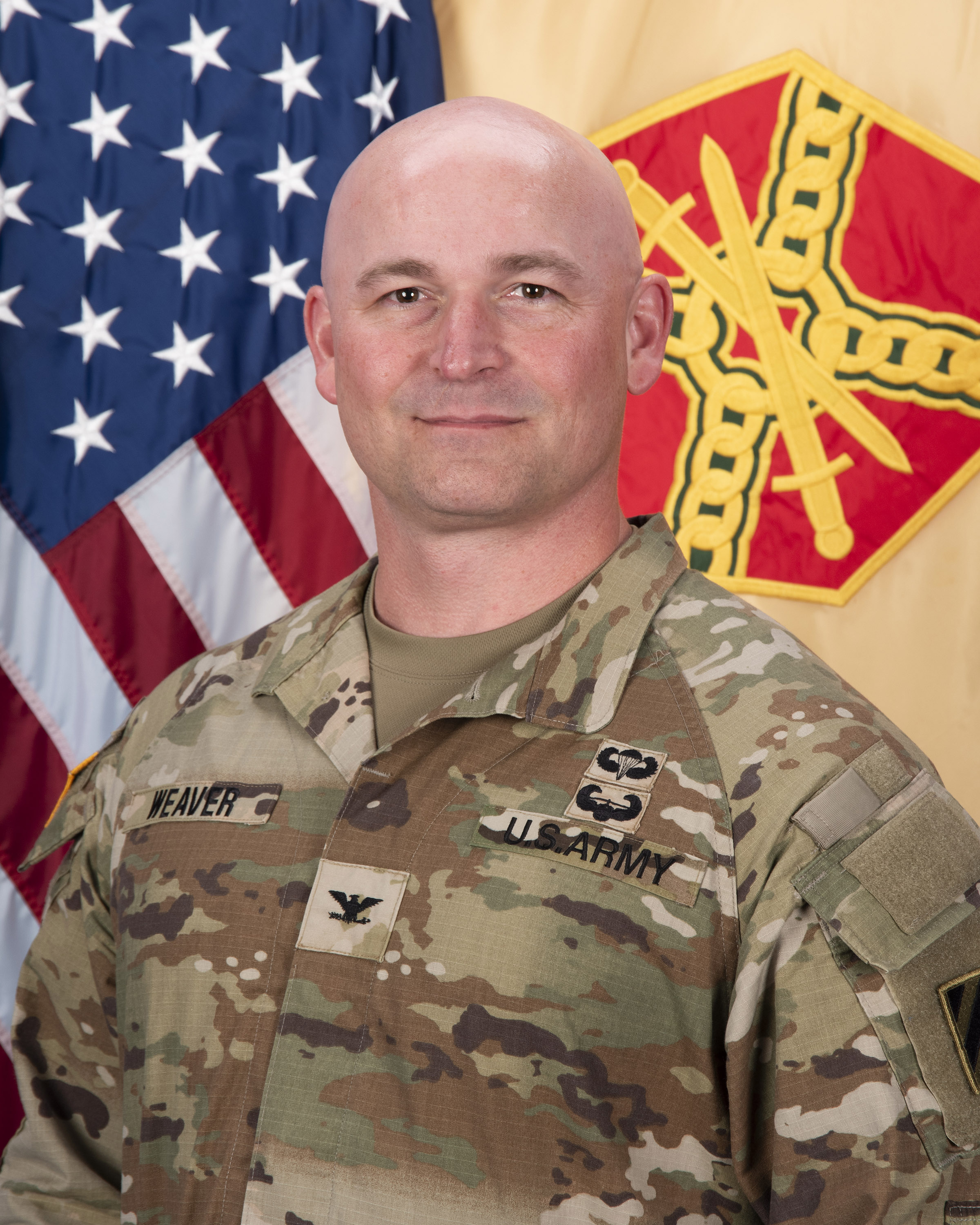
Welcome Letter


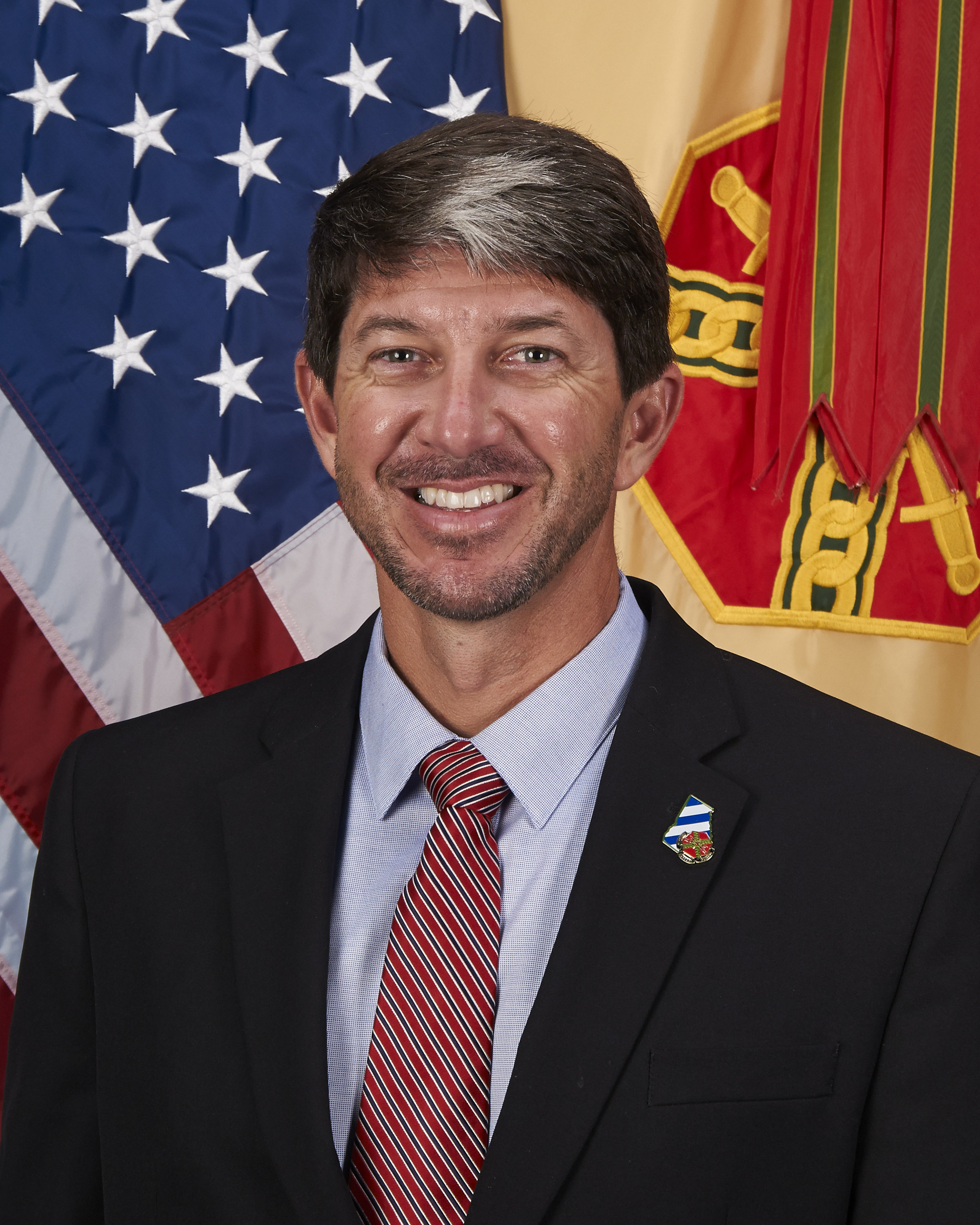
Ms. Jennifer M. Peterson
Deputy to the Garrison Commander (Interim)
History of Fort Stewart - Hunter Army Airfield
While the earliest peoples on Fort Stewart were the Native Americans, who settled the Western Hemisphere about 15,000 years ago, Great Britain established the Georgia colony as a buffer between her Carolina colonies to the north and her enemy the Spanish in Florida to the south. Oglethorpe established the first European settlement in the Fort Stewart area with the 1733 construction of Fort Argyle, in present day Bryan County on the west bank of the Ogeechee River. Its purpose was to raise the alarm in case Spanish or hostile Indians should move to attack the fledgling settlement of Savannah. It is ironic that the first European settlement of the Fort Stewart area was, in fact, a military fortification.
A garrison of Rangers and militia garrisoned the fort intermittently until its final abandonment in about 1770. In the mean time, there were few colonists willing to settle the wilderness of the Fort Stewart area, although by 1768 there was a small settlement at Taylors Creek. The Hunter Army Airfield area also had settlements on the Little Ogeechee River, possibly as early as the 1750s.
By the late 1930s a few thousand people lived in the Fort Stewart area in about sixty towns and communities, some as large as four hundred people. Developing communities included Willie, Clyde, Long Branch, Pleasant Grove, and others.
Hunter Army Airfield remained a rural area a few miles south of Savannah. The city constructed the first Savannah municipal airport there and undertook improvements on it throughout the 1930s.
Events in Europe in 1939-1940 would forever alter the character of the area. In 1939 Hitler invaded Poland. As World War II raged, the US government began greatly increasing military strength and expanded the number of installations.
The Federal government needed an anti-aircraft training camp and established the Camp Stewart Military Reservation for this purpose in 1940-41. The ranges required for anti-aircraft weapons and the numbers of Soldiers scheduled to train at Camp Stewart necessitated the government's purchasing or condemning more than 279,000 acres of land in Bryan, Evans, Liberty, Long and Tattnall counties in Southeast Georgia.
On 1 July 1940 the first 5,000 acres were bought and subsequent purchases followed. Eventually the reservation would include over 280,000 acres and stretch over five counties. The large expanse of property was required for the firing ranges and impact areas which an anti-aircraft artillery training center would need for live fire training.
In November of 1940 the Anti-Aircraft Artillery Training Center was officially designated as Camp Stewart, in honor of General Daniel Stewart, a native of Liberty County who had fought with Francis Marion during the Revolution and became one of the county’s military heroes. An announcement of the new post’s name was made in Jan. 1941.
During the early months, training was done on wooden mock-ups since real anti-aircraft guns were in short supply. Live firing exercises were conducted on the beaches of St. Augustine and Amelia Island, Fl. since the necessary ranges and impact areas had not been completed at Camp Stewart. This live fire training over the ocean continued until Sept. 1941 while at Camp Stewart practice firing and searchlight training progressed.
In Fall of 1941 the Carolina maneuvers were held and all the anti-aircraft units from Camp Stewart anticipated. As these maneuvers drew to a close, a feeling of restless anticipation pervaded the ranks of the National Guard soldiers who were looking toward their impending release from active duty after completion of their year of training. But the Japanese attack on Pearl Harbor on Dec. 7th ended these dreams. Now the U.S. was in the war and Camp Stewart set about accomplishing the mission it was intended for.
The National Guard units departed and new units came in for training. Facilities were expanded and improved. Anti-aircraft artillery training was upgraded and soon a detachment of Women’s Air Service Pilots (WASP’s) arrived at the air facility on post, Liberty Field, to fly planes to tow targets for the live fire exercises. Eventually radio-controlled airplane targets came into use as a more effective and safer means of live-fire practice.
As the war progressed, Camp Stewart’s training programs continued expanding to keep pace with the needs placed upon it. Units were shipped out promptly upon completion of their training and new units received in their place. The camp provided well-trained soldiers for duty in Europe, the Mediterranean, North Africa, and the Pacific theaters.
By late 1943 Camp Stewart assumed a new responsibility as one of many holding areas designated in this country for German and Italian prisoners of war who had fallen into Allied hands during fighting in North Africa. These men were held in two separate prisoner-of-war facilities on post and used as a labor force for base operations, construction projects, and for area farmers.
Beside its initial purposes as an anti-aircraft artillery training center, Camp Stewart also served as a Cook and Bakers School and as a staging area for a number of Army postal units. By Spring 1944 the camp was bulging at its seams as more than 55,000 soldiers occupied the facility during the build-up for the D-Day invasion. However, almost overnight, the post was virtually emptied as these units shipped out for England. With the D-Day invasion and Allied control of the air over Europe, the need for anti-aircraft units diminished and in response the anti-aircraft training at Camp Stewart was phased out. By Jan. 1945 only the prisoner-of-war camp was still functioning.
With the end of the war, Camp Stewart came to life briefly as a separation center for redeployed soldiers, but on 30 Sept. 1945 the post was inactivated. Only 2 officers, 10 enlisted men, and 50 civilian employees maintained the facilities and the GA National Guard did the only training during summer months. It seemed as if Camp Stewart had served its purpose.
However, once again, world affairs affected the life of Camp Stewart. With the outbreak of hostilities in Korea in June 1950, the U.S. once again found itself with the need to update training and prepare new soldiers to meet the crisis in Korea. Camp Stewart was reopened on 9 August 1950, its facilities repaired and troops brought in for training. On 28 Dec. 1950 Camp Stewart was redesignated as the 3rd Army Anti-Aircraft Artillery Training Center. Intensive training of soldiers destined for service in Korea began. Since control of the air in Korea wasn’t seriously challenged by the Communist forces, in late 1953 Camp Stewart’s role changed from solely anti-aircraft training to include armor and tank firing as well.
When the Korean conflict eventually cooled down, it was recognized that our country would be required to maintain a ready and able military force to deal with any potential threat to the Free World. Camp Stewart would have a role to play in that mission. The decision was made that the post would no longer be viewed as a temporary installation. On 21 March 1956 it was redesignated as Fort Stewart. Its role would continue to evolve in response to specific needs and world events.
In 1959 Fort Stewart was redesignated as an Armor and Artillery Firing Center, since its old anti-aircraft ranges and impact areas were better suited for this purpose than for the new age of missiles. By 1961 there was a feeling that Fort Stewart may have served its usefulness and there was movement afoot to deactivate the post again. However, the age of missiles brought with it new threats and a new place for Fort Stewart.
In late 1962 the U. S. was shocked to discover Russian offensive missiles being placed in Cuba. This revelation eventually lead the world to the brink of war as the two super-powers stood toe-to-toe, each refusing to back away. The U.S. demanded the removal of these missiles and Russia refused to comply. In response to this threat the U.S. military began a rapid mobilization for possible use against Cuba. The 1st Armored Division was ordered to Fort Stewart for staging and in the short span of two weeks the population of the post rose from 3,500 personnel to over 30,000.
The country prepared for the worst, but in the end a compromise was reached, and the crisis passed. Shortly after, word was received at Fort Stewart that a VIP would be visiting the post and that the post conference room wasn’t worthy of a person of this stature. Thus, preparations were rapidly made to convert this conference room into a more suitable one. The command group at Fort Stewart quickly discerned that this VIP would be none other than our nation’s President, John F. Kennedy. He arrived at Hunter Field on 26 Nov. 1962, flew to Donovan Parade Field at Fort Stewart, where he reviewed the entire 1st Armored Division. From there he was taken to the new conference room where he was briefed on armed forces readiness to respond to the Cuban missile crisis, then visited troops in nearby training areas.
After the Cuban missile crisis had passed, the Cold War situation kept Fort Stewart in an active training role. During the late 1960’s another developing situation would bring about yet another change in Fort Stewart’s mission. With tensions growing in the divided country of Viet Nam, the U.S. found itself becoming increasingly involved in that conflict.
The Vietnamese terrain and the type of war being fought there demanded an increased aviation capability through the use of helicopters and light, fixed wing aircraft. This brought about a need for more aviators. In response to this need, an element of the U.S. Army Aviation School at Fort Rucker, Alabama was transferred to Fort Stewart in 1966. Helicopter pilot training and helicopter gunnery courses became Fort Stewart’s new mission. In an ironic twist, now instead of training soldiers to shoot down aircraft, they were training soldiers to fly them.
When the Air Force closed their base at Hunter Field in Savannah in 1967, the Army promptly assumed control and in conjunction with the flight training being conducted at Fort Stewart, the U.S. Army Flight Training Center came into being. The helicopter pilot training was rapidly accelerated and pilots were trained and soon sent to duty all over the world, with a large percentage seeing active duty in Viet Nam.
In 1969 President Nixon planned to reduce American involvement in Viet Nam by training the Vietnamese military to take over the war. In conjunction with this, helicopter flight training for Vietnamese pilots began at the Training Center in 1970 and continued until 1972.
Gradually America’s involvement in Viet Nam dwindled and by mid-1972 the flight training aspect of Fort Stewart’s mission was terminated and both Hunter Field and Fort Stewart reverted to garrison status. The following year Hunter was closed entirely and Fort Stewart sat idle with the exception of the National Guard training which continued to be conducted at the installation.
It appeared as if Fort Stewart had once again reached the end of its usefulness and questions were raised about its status and future. The end of the Viet Nam conflict meant a new focus for the U.S. Army, and a new life for several of the Army’s historic units would mean new life for Fort Stewart.
On 1 July 1974 the 1st Battalion, 75th Infantry Regiment (Ranger), parachuted into Fort Stewart and was reactivated the following month. They were the first Army Ranger unit activated since WWII. Hunter Army Airfield was once again reopened to support the training and activities of the Rangers.
In Oct. of 1974 the Headquarters, 1st Brigade of the 24th Infantry Division was activated at Fort Stewart. This historic unit, which had seen active and arduous service in the Pacific during WWII and in the Korean War, had been inactive since 1970. The "Victory" Division, as it was known, was going to make Fort Stewart its home, and it was perhaps fitting that the "V" shaped layout of the main post itself. The 24th Infantry Division would make Fort Stewart uniquely its own.
With the reactivation of the 24th Infantry Division, the post entered a new phase in its history. Facilities were upgraded and new permanent structures replaced many of the old wooden buildings from the days of Camp Stewart. On 1 Oct. 1980 the 24th Infantry Division was designated a mechanized division and assigned as the heavy infantry division of the newly organized Rapid Deployment Force. This designation was the fruition of that potential first realized by those who served at the post during the Cuban missile crisis.
The 24th Infantry Division began intensive training over the expanse of piney woods and lowlands of the post, and conducted live fire exercises on many of the old Camp Stewart anti-aircraft ranges. Additional deployment training and exercises took Division units from GA’s wood-lands to the National Guard Training Center in California, as well as to other area of the world such as Egypt and Turkey. Their training was continuous. The mission of the Rapid Deployment Force was to be prepared to deploy to practically any point on the globe at a moment’s notice to deal with whatever threat might be discerned.
In August 1990, Iraq invaded and overran neighboring Kuwait and threatened to do the same to Saudi Arabia. The Port of Savannah worked around the clock to load and ship the Division’s heavy equipment, while aircraft shuttles from Hunter Field flew the Division’s personnel to Saudi Arabia. Within a month the entire Division had been reassembled in Saudi Arabia to face the possible invasion of that country by Iraqi forces. Fort Stewart saw a growing influx of National Guard and Reserve units who were being mobilized to support the operations in Saudi Arabia and to assume the tasks at the post which had formerly been accomplished by Division personnel. In many ways, Fort Stewart appeared to be almost a ghost town, as never before has the entire Division been deployed from the post at one time. Within eight months the crisis in the Persian Gulf had concluded and the 24th Infantry Division triumphantly returned to its home in coastal GA.
After thirty-eight years of service on the frontlines in Europe, on 25 April 1996 the historic 3rd Infantry Division replaced the 24th Infantry Division at Fort Stewart and Fort Benning, where it served as the “Iron Fist” of the XVIII Airborne Corps rapid global response force.
Less than a year later, the mission objective in Iraq shifted from combat operations to stability and advisement. At the same time, in late 2009, the division’s attention turned from Iraq to Afghanistan, with the 3rd Combat Aviation Brigade becoming the first brigade in Afghanistan, followed by elements within the division in 2010. Elements of the division would return to Afghanistan in 2012, 2013, 2015, and 2017. 1ABCT deployed to Europe in support of Operation Atlantic Resolve for two years beginning in 2016, then two nine-month rotations to Korea in late 2018 and late 2020, and then in early 2022, rotated to Europe as a show of force against Putin’s invasion of Ukraine. 2LIB deployed several times to Africa, and in 2017, the brigade transferred back to ABCT and deployed to Europe in support of operation Atlantic Resolve in 2020. Then in 2021, the Medal of Honor was posthumously bestowed upon SFC Alwyn Cashe for his heroic action after his Bradley Fighting Vehicle hit an improvised explosive device (IED) and the subsequent retrieval of six Soldiers and an Iraqi interpreter from the burning vehicle.
Today, Fort Stewart is one of the Army's premier installations and has earned the Army Community of Excellence Award an unprecedented six times in 2004, 2005, 2006, 2009, 2012, and 2015.
Over the last year elements from Division HQ, 2ABCT, 3CAB, DIVARTY, and 3DSB successfully deployed to Europe in support of our NATO Allies and partners. 1ABCT validated their readiness at NTC as they prepare to deploy to Europe to defend NATO’s eastern flank. The 3ID continues to execute tough, realistic training, ready for any future mission

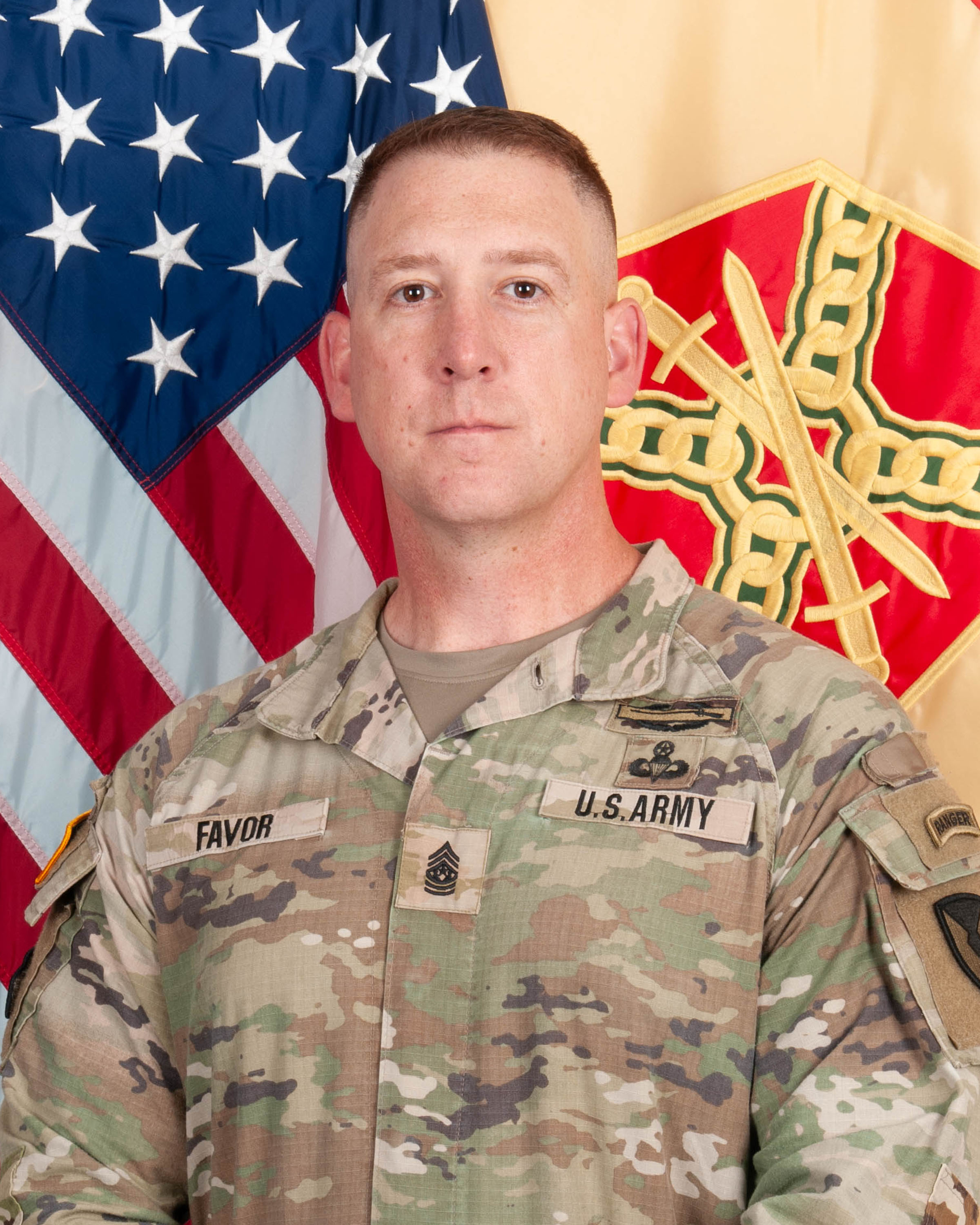
LTC Kyle Stillwell
Garrison Commander - Hunter Army Airfield

History of Hunter Army Airfield
The 1920s marked the true beginning of civilian aviation in the United States. By 1930 nearly 1700 civilian airports had been established in the nation. As part of this national trend, in 1927 the City of Savannah bought 900 acres of woods, pasture, and swamp three miles south of the city limits for the first Savannah Airport—later known as Hunter Field.
In three years, using mostly chain-gang labor, Chatham County ditched the area, graded the field with 400,000 cubic yards of sand, and planted it with Bermuda grass. The landing area was 4,500 feet long and 3,500 feet wide with no runways. Aircraft could take off and land in any direction. The original airfield lay roughly on what is now Hunter Army Airfield’s parking apron.
On Sep.20, 1929, a six-seater Bellanca CH-300 Pacemaker named “The City of Savannah” became the first aircraft to land at the Savannah Airport, inaugurating the Eastern Air Express New York to Miami air service. One month later, the stock market crashed, plunging the U.S. into the Great Depression. By November of that ill-fated year, Eastern Air Express folded. This left Savannah without regular air service until 1931, when Eastern Airlines began offering intrastate travel from Savannah to Augusta and Atlanta.
In spite of the depression, the city undertook a number of improvements to the airfield throughout the decade, including the 1932 construction of Wilson Boulevard, named after Judge Horace Emmett Wilson, chairman of the city’s airport commission. In 1936, the city and one of President Roosevelt’s public works programs, the Works Progress Administration (W.P.A.), cooperated in making significant improvements to the airport. The W.P.A. spent $130,000 and the city $36,000 to rebuild the drainage system, construct a new metal hangar, and replace the grass airfield with three new asphalt runways.
The first Savannah-based flying service, Strachan Skyways, moved into this hangar after it was built. Henry G. “Sandy” Strachan, a prominent local aviator of the 1930s, owned and managed the airport.
According to the Savannah Morning New, Strachan was “recognized as one of the leading fliers of Georgia… [and] credited as much as anyone else with bringing the magical world of flight to Savannah’s attention.” Air activity grew apace with the airfield. By decade’s end, the airfield hosted regular flights from both Delta and Eastern Airlines.

A crowd views a Strachan Skyways aircraft on display at the Savannah Municipal Airport hangar on February 13, 1937. From 1927 to 1949, before the War Department took it over, Hunter Army Airfield served as Savannah’s Municipal Airport. (Photo from the Cordray-Foltz Collection, courtesy Georgia Historical Society)

Jeanne Hunter, sister of “then” Col. Frank O’ Driscoll Hunter, unveils a plaque at the dedication ceremony of Hunter Field on May,19, 1940. Hunter Army Airfield was named after Hunter in 1940. (Photo courtesy Mighty Eighth Air Force Museum)
When Hitler invaded Poland in September 1939, the U.S. Army had 175,000 men, ranking 17th in the world—weaker than both the Dutch and Romanian armies. Meanwhile, the Japanese, locked in combat with the Chinese since 1937, were looking to expand their empire in Asia. The Air Corps, part of the Army at the time, had only 2,200 obsolete aircraft stationed at 24 airfields around the country. Europe and China were engulfed in war, and although the U.S. was not yet involved, in the corridors of Washington preparations began for a military build-up. Still, the war seemed far away from Savannah in that late summer. The Air Corps commissioned Sandy Strachan a lieutenant in September, but business continued as usual at the airport. In 1939-1940, the city built a permanent municipal airport building to house growing administrative activities of the airport. The building’s terrazzo floor previously on the flight line, is intact at the Mighty Eighth Air Force Museum in Pooler, Ga. On 19 May 1940, the city officially dedicated the airport as “Hunter Field.”
In 1940, the U.S. began to re-arm in preparation for war. The government increased funding for new equipment and bases and instituted a peace-time draft. A primary beneficiary of this new bounty was the Air Corps, which by 1941 had grown to over 25,000 personnel and 4,000 aircraft. The Air Corps needed new airbases to accommodate its growth, and in August 1940, selected Hunter Field as a light bomber training base.
Within two months, the Air Corps transferred 3,000 personnel of the 3rd and 27th Bomb Groups, and a hundred A-18 trainers, A-20 light bombers, and B-18 medium bombers to the new base, sharing the airfield with the civilian airport. Within nine months the military had constructed an entire cantonment north of the runways, featuring over 220 facilities including barracks, warehouses, a hospital, hangars, and operations buildings. The threat of war had transformed the sleepy southern airfield into a bustling military installation.
The 3rd and 27th Bomb Groups trained at Hunter Field throughout 1940-41, participating in large-scale Army maneuvers in the Carolinas. On Dec. 7, 194, the Japanese bombed Pearl Harbor. All passes from Hunter Field were immediately canceled and airmen required to wear uniforms at all times. The U.S. now faced war with Japan and Germany.
From 1941 to 1943, the base grew to a population of 10,000, expanded its boundaries from 900 to nearly 3,000 acres, built six additional cantonments and tent camps at the installation, expanded runway capacity, built aircraft parking aprons, and trained ground support squadrons, bomber groups, and fighter groups.
Units trained at Hunter Field later saw active combat in all major theaters of war, including the China-Burma India Theater, the Pacific, and in Europe.
Over the past 60 years the installation has demolished most of its 450 World War II buildings. World War II structures that remain include a water tower, an abandoned ammunition storage area, a heat plant, two bomb sight storage facilities, the sewage treatment plant, the small arms range (used in World War II to test fire and sight in aircraft-mounted machineguns and cannon), three hangars and various administration buildings and warehouses.
As the 1940s ended, the Soviet Union, formerly a World War II ally, showed itself under the dictator Josef Stalin, to be an implacable foe of western capitalism and democracy. The Soviets took control of Eastern European nations, attempted a blockade of Berlin in 1948, and exploded their own atomic weapon in 1949. The U.S. grew increasingly concerned with Communist aggression and expansion. In 1947, President Truman signed the National Security Act (NSA), reorganizing the U.S. defense and intelligence establishments and making the Air Force a completely independent branch of service. Because of its role in atomic bomb deployment, the Air Force became the most important branch of the service. The Air Force’s Strategic Air Command (SAC) was responsible for atomic bomb delivery, making it the most important of the Air Force commands.
In 1948, there were less than 60 atomic bombs in the U.S. nuclear arsenal, stored in four “Q Areas” controlled by the civilian Atomic Energy Commission, all adjacent to Air Force bases in the southern parts of the country: one in New Mexico, one in Tennessee, and two in Texas. By 1950, SAC consisted of 14 bomb wings, flying mostly B-29 and B-50 propeller medium bombers, or huge B-36 piston-pull heavy bombers. Like the Q Areas, SAC based its bombers primarily in the southeast and southwest parts of the country. As part of SAC’s southern strategy, in 1949, SAC stationed the 2nd Bomb Wing and its B-50 bombers at Chatham Field, a World War II airbase built a few miles west of Savannah. However, Chatham Field had inadequate barracks and operations facilities, and proved unsatisfactory for SAC. In order to keep SAC in the Savannah area, the city offered to exchange Hunter Field for Chatham Field.
SAC accepted and in September 1950, the switch occurred. Hunter Field became Hunter Air Force Base (Hunter AFB), while Chatham Field became the Savannah Municipal Airport, now known as the Savannah/Hilton Head International Airport.
When SAC arrived at Hunter AFB in 1950, they found a neglected World War II-era airport. Buildings creaked with rotten siding and broken windows, while asphalt roads showed ruts and holes, and grass grew through the pavement of aircraft parking aprons. A land conflict in Asia soon accelerated the pace of base construction and development.
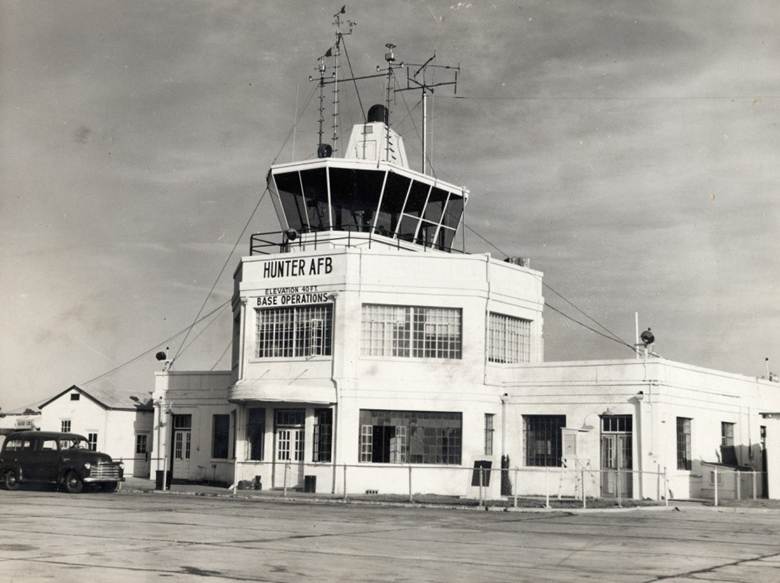
Hunter Air Force Base’s old air terminal and air traffic control tower circa 1951. (Photo from the John Baker Collection, courtesy Mighty Eighth Air Force Museum)
In June 1950, Communist North Korea invaded South Korea, starting the Korean War (1950-1953). Concerned that this attack was orchestrated by Moscow as the first round of World War III, the Truman administration began an immense American military build-up, with SAC a major beneficiary. During the Korean War, the U.S. nuclear arsenal increased from 300 atomic bombs to over 800, while SAC grew from 59,000 to 153,000 personnel, developed and issued new jet aircraft, and built up new bases, including Hunter AFB.
By January 1951, SAC had slated a second bomb wing for Hunter AFB, and in 1950-51 spent over $5.6 million on the base, mostly in repairing World War II buildings, roads, and runways, and expanding the base to its current boundaries west to the Little Ogeechee (Forest) River and east to White Bluff Road. In the summer of 1951 Congress spent nearly $6 billion on the largest military construction program since World War II. Hunter AFB received $24.5 million, promptly spending $2.5 million on building what is now the installation’s current runway.
In 1952, Dwight D. Eisenhower was elected President. After Eisenhower’s election, a series of military and political events, including the development of thermonuclear weapons thousands of times more powerful then atomic bombs, spurred the arms race between the US and the Soviet Union. It was thus under Eisenhower that the concept of deterrence through the threat of massive nuclear retaliation became central to US strategic planning, and was formalized in a reform of the military establishment called “The New Look”—named after a style of women’s fashion advertised in Vogue magazine. Under the New Look, the Eisenhower administration stressed the deterrent potential of nuclear weapons by making SAC the centerpiece of the military establishment, and from 1953 to 1961 SAC received nearly 50 percent of the entire U.S. military budget.
With this massive increase in funding, it is no surprise that many buildings at Hunter Field today date from this time period.
From 1953 to 1956, the installation, in conjunction with the Savannah District Corps of Engineers, constructed on-post Family housing, three massive pinwheel barracks, new double cantilever hangars, new administration and shop buildings, new air traffic control buildings, and new community and recreation facilities.
Throughout the previous year, in addition to undertaking regular duties, SAC personnel at Hunter AFB had been training to fly and maintain this new aircraft, vastly different from their World War II-vintage propeller-driven bombers. With its swept-wing design and bubble cockpit, it looked and maneuvered more like a fighter than a bomber.
This required more intensive flight training then was given to World War II bomber crews, and Hunter AFB, like other SAC bases, emphasized a high degree of training and readiness. Combat crews continually practiced navigation problems, bomb runs, outdoor survival, and other skills necessary to fight and (possibly) survive nuclear war.
In support of the combat crews, SAC maintenance personnel worked on aircraft along the massive concrete aircraft parking apron, capable of parking over 130 bombers and refueling tankers. The 2nd Bomb Wing operated from the north edge of the apron, while the 308th operated on the east edge. Basic maintenance and inspections of aircraft by combat squadrons and organizational/ periodic maintenance squadrons occurred in nose docks, or on the flight line.
More specialized maintenance occurred in the large hangars under field maintenance squadrons. Smaller aircraft components were often removed for maintenance in the armament & electronics squadron shops, which mostly operated out of old World War II buildings and hangars. Wing maintenance control directed all of these maintenance activities.
FROM WING ROTATION TO REFLEX
In 1954, SAC headquarters rated the entire 38th Air Division combat-ready and nuclear-capable. The 38th took part in wing rotation, a SAC program bringing bombers within easy range of the Soviet Union through ninety-day tours at SAC bases in the United Kingdom and North Africa.
Hunter AFB’s flight line was the staging area for the wings’ deployment. The 2nd Bomb Wing undertook two wing rotations to the United Kingdom in 1951 and 1952. Both the 2nd and 308th Bomb Wings conducted multiple wing rotations to North Africa, particularly to Sidi Slimane, Morocco, after 1952. However, the presence of large U.S. bomber forces often caused political problems for the host countries. Wing rotation deployments ceased by the late 1950s. The 1950s was a decade of continual evolution of nuclear weapons and delivery technology. By 1953 both the Soviet Union and the United States had developed thermonuclear, or hydrogen bombs, hundreds of times more destructive than atomic bombs. More ominously still, the development of missiles meant the warning time for an attack would soon be measured not in hours, but within minutes. This dawning realization led to SAC developing both a rapid response for its bomber force (the Alert program), and on-site nuclear and thermonuclear weapon storage on all SAC bomber installations. The latter program was called the Bombs on Base (BOB) program—fifteen facilities built in the current ammunition area were constructed as part of BOB in 1957.
By 1956, SAC had developed a one-third ground alert concept, which envisioned a third of SAC aircraft on alert and armed, ready to take off within 15 minutes’ warning for retaliatory nuclear strikes. In 1956, SAC headquarters designated Hunter AFB as the first test site for this concept. Under Operation TRY OUT (November 1956-April 1957), Hunter AFB locked the installation down, placed a third of its aircraft in full alert configuration, and continued normal training and maintenance schedules. The next six months were a grueling ordeal for the officers and men at Hunter AFB. One airman of the 2nd Field Maintenance Squadron recalled. Hunter AFB proved the one-third alert concept feasible and SAC quickly moved to implement the program after TRY OUT.

A B-47 crew of the 2nd Bomb Wing, based at Hunter Air Force Base review a flight plan prior to a flight in 1957. From 1950 to 1967, Hunter Army Airfield was referred to as Hunter Air Force Base and served under the Air Force’s Strategic Air Command. (Photo from the Holly Lantz Collection, courtesy Mighty Eighth Air Force Museum)
In the late 1950s and early 1960s, when the US faced the threat of missile attack with only a bomber force, one third ground alert remained critical to US nuclear deterrence, and SAC bombers used variations of this alert concept through the end of the Cold War. In July 1957, SAC also began Reflex operations, which stationed bombers on ground alert in overseas bases primarily in North Africa and England. Reflex soon replaced wing rotation. By 1958, Hunter AFB began both home station alert and Reflex operations.
In October 1957, the Soviet Union launched Sputnik I, the first man-made orbital satellite, leaping ahead of the U.S. in what came to be known as the “Space Race.” Sputnik proved Soviet intercontinental ballistic missile (ICBM) capability. With the United States’ own rockets and missiles under development, SAC’s bomber alert and Reflex program became more important then ever to the country’s defense against Soviet missile attack.

“Then” Brig. Gen. Hunter surrounded by several Army Air Corps officers in England. In the back row is also a Royal Air Force officer. Seated on Hunter's right is Her Majesty Queen Mary, wife of George VI, King of England. On the bottom of the paper on which the photo is fastened, is Mary's signature. In addition to the photos is the original notation written by Hunter that reads "Queen Mary and group of RAF and American officers at RAF station in England, 1943. (Photo from the collection of Ms. Jim Hungerpiller, courtesy Mighty Eighth Air Force Museum)
In the mid-1950s, SAC began basing bomb wings in the northern tier of the country, closer to the Soviet Union when flying over the Arctic Circle, and away from heavily populated areas. By 1955, the first B-52 heavy bombers—with greater range and payload capacity than the B-47—came online, while the U.S. deployed ICBMs by 1959. The development of ICBMs and the B-52 precluded the need for B-47 bases in the southeast. Hunter AFB became obsolete.
By 1960 SAC had transferred the 30th from Hunter AFB and announced the base’s eminent transfer to Material Air Transport Service (MATS), another Air Force command. Because of changes in technology and American nuclear strategy, Hunter AFB’s days as a SAC installation were definitely numbered.
The country elected John F. Kennedy President in 1960. The Soviets tested the young president repeatedly. Two years into Kennedy’s presidency, in October 1962 (six months before SAC was scheduled to leave Hunter AFB), the Soviets began installing medium-range nuclear missiles in Cuba. The U.S. imposed a naval blockade on missile shipments and demanded the missiles’ removal. The world waited nervously and wondered what would happen if the Soviets tried to run the blockade—would a naval incident between the two superpowers start World War III?
Hunter AFB’s 2nd Bomb Wing already had 17 B-47s on Reflex alert overseas, and dispersed 13 other bombers to Shaw and Charleston AFBs in South Carolina, all in full Emergency War Order configuration, loaded with nuclear weapons and Jet-Assisted Take Off rockets for lift-off. Beginning Oct. 20, 1962, the installation hosted the B-47s of the entire 306th bomb Wing. On Oct. 22, SAC placed its fleet at DEFCON 3, increasing readiness and alert levels above normal levels. By Oct. 24, all aircraft at Hunter AFB, 60 B-47 bombers with full nuclear payloads, sat silent on the aircraft parking apron and the “Christmas Tree” apron at the alert area, waiting for the balloon to drop. Other SAC bases in the U.S. and overseas were on full alert. Overhead, B-52s flew on airborne alert. Fortunately, the Soviets stepped back from the abyss on Oct. 29, 1962, pulling the missiles from Cuba while Kennedy secretly agreed to withdraw U.S. missiles from Turkey. In this most dramatic Cold War incident of nuclear brinksmanship, the Soviets had blinked.
Within six months of the end of the Cuban Missile Crisis, all SAC aircraft had left Hunter AFB. In April 1963, SAC transferred Hunter AFB to the 63rd Troop Carrier Wing of MATS (Materiel Air Transport Service), which stationed 60 C-124 cargo planes and 4,300 men to the installation. By 1964, tenant units had also moved to the base, including the Coast Guard. The 63rd’s missions were truly global, and flew in support of humanitarian efforts, the Gemini NASA missions, and military operations such as the U.S intervention in the Dominican Republic in 1965.
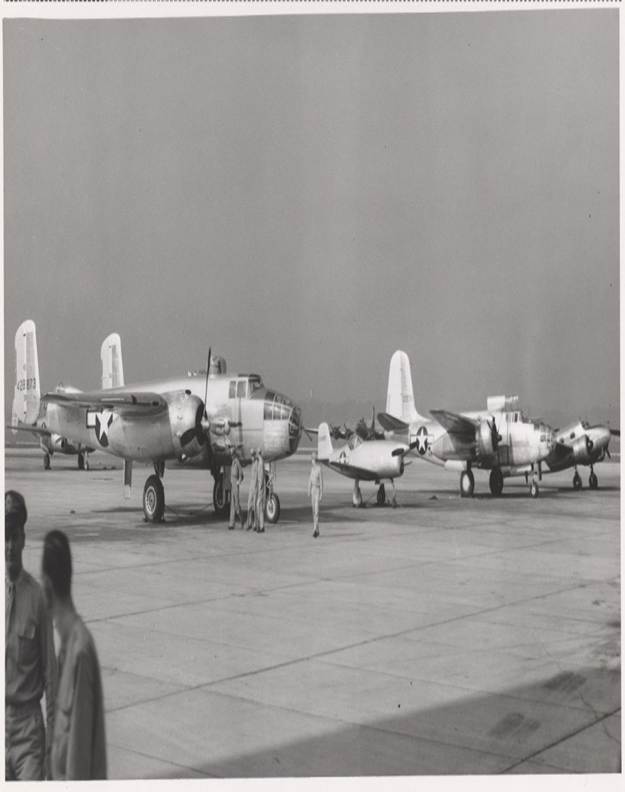
From left to right, B-25 Mitchell, Bell XP-77, Douglas A-20 and Beech C-45 parked on the Hunter Air Force Base flight line during WWII. (Photo courtesy Mighty Eighth Air Force Museum)
Significantly, missions to Vietnam gradually increased as the decade wore on and the U.S. became more deeply involved in that country’s affairs. In 1964, a year after MATS arrived, the Department of Defense announced Hunter AFB’s closing. Built as a SAC base, Hunter AFB did not have the facilities needed to support transport missions.
In the late 1950s and early 1960s, the Army developed troop-carrying transport helicopters, helicopter gunships designed for close air support, and tactical doctrine for airmobile warfare. These efforts paid off in a tactical sense when the U.S became involved in the Vietnam War. In 1965, U.S. combat troops were sent to bolster a shaky authoritarian regime in South Vietnam against an insurgency sponsored by Communist North Vietnam. The helicopter became the crux of the Army’s tactical efforts, essential in jungle terrain for air transport, fire support, medical evacuation, and supply.
The need for more helicopter pilots drove the expansion of the Army’s aviation program, which saved Hunter AFB as a military base. In December 1966, the Department of Defense announced that the official new home of the Army’s Advanced Flight Training Center (AFTC) would be Hunter Army Airfield (HAAF) and Fort Stewart. The airfield’s massive parking apron, built by SAC for jet bombers, offered more than enough space for helicopter training operations.

A B-50 of the 2nd Bomb Wing undergoes maintenance at a nose dock on Hunter Air Force Base’s flight line, circa 1951. (Photo from the John Baker Collection, courtesy Mighty Eighth Air Force Museum)
Hunter became one of the Army’s key helicopter training sites during the Vietnam War. Between 1967 and 1972, Hunter and Fort Stewart trained 11,000 rotary wing pilots and 4,328 fixed wing pilots, including 1400 South Vietnamese aviators. The U.S. withdrew all combat troops from Vietnam in the early 1970s and in 1972 the Army closed Hunter. In 1975, North Vietnam conquered South Vietnam, closing an ignominious chapter in American history.
The Army reopened Hunter in 1974 and designated it a sub-post of Fort Stewart and a base for the 24th Infantry Division’s helicopter and support elements. In 1978, the 1st Battalion, 75th Ranger Regiment moved to Hunter as a tenant unit.
By the late 1970s, Hunter had become the U.S. Army’s premier rapid deployment node on the eastern seaboard, thanks in no small part to facilities left behind by the Air Force, including the runway, parking apron, and the old SAC alert area, now called “Saber Hall.” Special Forces troops or elements of the 24th Division could deploy as rapidly as possible to nearly anywhere in the world, making it a potent offensive resource in the Cold War. The installation’s effectiveness was demonstrated by its use as a rapid deployment center during the 1983 Grenada invasion, when the US squelched a Cuban-sponsored Marxist island state in the Caribbean.
In 1990 the Soviet Union collapsed, relegating Communism to the dustbin of history. For forty years the installation’s purpose had been largely geared to the ongoing Cold War. What would the future hold for Hunter Field, and indeed, the U.S. military?
In 1990-1991 the 24th Infantry Division (Mechanized) participated in Operations Desert Shield and Desert Storm, taking part in the liberation of Kuwait and the destruction of much of Saddam Hussein’s Iraqi Army. However, few missions in the 1990s had the clarity of Desert Storm, and the Army conducted multiple open-ended peace-keeping and humanitarian missions in countries as diverse as Haiti, Somalia, and the former Yugoslavia, with mixed results. In the middle of this uncertain decade, in 1996, the 24th Infantry Division (Mechanized) was re-flagged the Third Infantry Division, “The Rock of the Marne.”
CONFRONTING GLOBAL JIHAD: 2001 TO 2003
After a close and controversial election, in 2001 President George W. Bush was sworn into office. On September 11 of that year, al-Qaeda terrorists flew three passenger aircraft into the Pentagon and World Trade Center towers, killing 3,000 people. Once again, America was at war, although not with a traditional enemy, but an extremist religious movement.
The current protracted guerrilla conflicts in Afghanistan and Iraq—fought as part of the larger War on Terror—have accelerated changes in organization and doctrine and also increased the construction tempo on Army installations, including Hunter. The Stewart/Hunter complex is the largest Army installation east of the Mississippi. It plays a vital role in the defense of this nation and continues to carry out difficult and dangerous missions in support of the rising democracy in Iraq and Afghanistan after this nation was attacked on a terrible September morning nearly eight years ago.

President George W. Bush, and wife Laura, arrive at Hunter Army Airfield in 2004 to attend the G-8 World Summit at Sea Island, GA. June 6-10. (Photo courtesy U.S. Army)
Hunter remains an important deployment and support base for the Army and for other joint services, thanks to its existing airfield facilities and location adjacent to Fort Stewart and the east coast ports of Savannah and Charleston. In January 2003, Soldiers in the 3rd Infantry Division (Mechanized) were the first U.S. unit to enter Baghdad for Operation Iraqi Freedom during the invasion, and the first division to serve three tours in Iraq. The entire division deployed from Hunter Army Airfield to Kuwait in the weeks that followed. The 3rd ID spearheaded Coalition forces, fighting its way to Baghdad in early April, leading to the end of the Saddam Hussein regime. After combat, Soldiers from 3rd ID shifted focus to support and stabilization operations in an effort to rebuild the war-ravaged country. The division returned to Ft. Stewart in August 2003.
The Third Infantry Division was the first division in the U.S. Army to serve a second tour in Iraq. In January 2005, the division returned to Iraq and led U.S. and coalition forces in Baghdad. The hard work created conditions for a secure Iraqi election and transfer of power to the first democratically elected national government in the country. The Division served with its coalition partners during Operation Iraqi Freedom III for a year before returning to Fort Stewart-Hunter Army Airfield in January 2006. On November 17, 2006, the Army announced that the 3rd ID would be the first Army division to serve three tours in Iraq as part of the 2007 "troop surge." The Division Headquarters deployed from Fort Stewart through Hunter Army Airfield in March of 2007.
Task Force Marne was composed of more than 20,000 U.S. Soldiers, more than 26,000 Iraqi army soldiers, and over 46,000 Iraqi police. Along with combat operations, Task Force Marne focused on rebuilding the local government, Iraqi security forces and the economy. In the fall 2009, 3rd ID Headquarters, 2nd Brigade Combat Team and 3rd Brigade Combat Team deployed to Iraq for their fourth tour in that country while other units followed.
The majority of Soldiers from the 3rd Combat Aviation Brigade, based out of Hunter Army Airfield, began arriving in Afghanistan in support of Operation Enduring Freedom late in the summer of 2009. The 3rd CAB is a 3rd ID brigade but falls under the 82nd Airborne Division's operations in and around Regional Command East.
The 3rd CAB is organized by four multifunctional task forces comprised of UH-60 Blackhawk helicopters and MEDEVAC helicopters, AH-64D Apache Longbow attack helicopters, CH-47D Chinook helicopters, and the OH-58 Kiowa Warriors. In addition the 3rd CAB benefits from the skills of their aviation support battalion and an integrated reserve component from Texas.
This deployment marks the brigade's fourth deployment since 2003 in support of an Era of Persistent Conflict. The brigade's previous deployments were during the initial invasion into Iraq in 2003, OIF III in 2005 and OIF V in 2007.
It’s been 60 years since the Air Corps developed Hunter into a military airfield. During the Cold War, the installation adapted to the military’s changing needs, serving first as a bomber and air transport base for the Air Force, then as an Army helicopter training base, and finally as a rapid deployment node and home for an infantry division’s aviation units, in addition to tenant units including U.S. Special Operations units, a U.S. Marine Corps Reserve unit, the U.S. Coast Guard’s Air Station Savannah, the Georgia Air and Army National Guard units, the 224th Military Intelligence Battalion, the 260th Quartermaster Battalion, Tuttle Army Health Clinic and the units of the U.S. Intelligence and Security Command.
The Global War on Terror has passed into history but, chances are, it won’t be this installation’s final chapter as overseas contingency operations continue.
GARRISON HEADQUARTERS FSGA



| Sunday | Closed |
| Monday | 8am-5pm |
| Tuesday | 8am-5pm |
| Wednesday | 8am-5pm |
| Thursday | 8am-5pm |
| Friday | 8am-5pm |
| Saturday | Closed |
BLDG 709
1791 Gulick Avenue
Fort Stewart GA 31314
GARRISON HEADQUARTERS HAAF
Primary: 571-801-5236
| Sunday | CLOSED |
| Monday | 8:30 AM - 4:00 PM |
| Tuesday | 8:30 AM - 4:00 PM |
| Wednesday | 8:30 AM - 4:00 PM |
| Thursday | 8:30 AM - 4:00 PM |
| Friday | 8:30 AM - 4:00 PM |
| Saturday | CLOSED |
BLDG 1201
685 Wilson Blvd
Savannah, GA 31409
NOTICE: Garrison Operations: 571-801-5242